Many importers want to know the cost per kg for air and sea shipping to Africa, but the real price depends on cargo type, volume, route, transit time, and service scope. If you ask only, “How much do you charge per kg?”, the answer will almost always be incomplete. This guide explains how air and sea freight are priced, what affects your final shipping cost, and how to choose the right option for cargo moving to Africa.
In simple terms, air freight is usually faster but more expensive, while sea freight is usually cheaper for larger or heavier cargo. However, neither option follows one fixed price rule for every shipment. Air freight is often based on chargeable weight, while sea freight may be based on volume, container usage, origin charges, destination charges, and local handling fees. That is why two shipments with the same weight can still get very different quotes.
For buyers shipping to Africa, destination also matters. Port conditions, customs efficiency, inland delivery needs, and local logistics performance can all affect the total landed cost. That is why a useful freight quote should always be based on the shipment details, not just the weight.
How Air Freight Is Charged Per KG
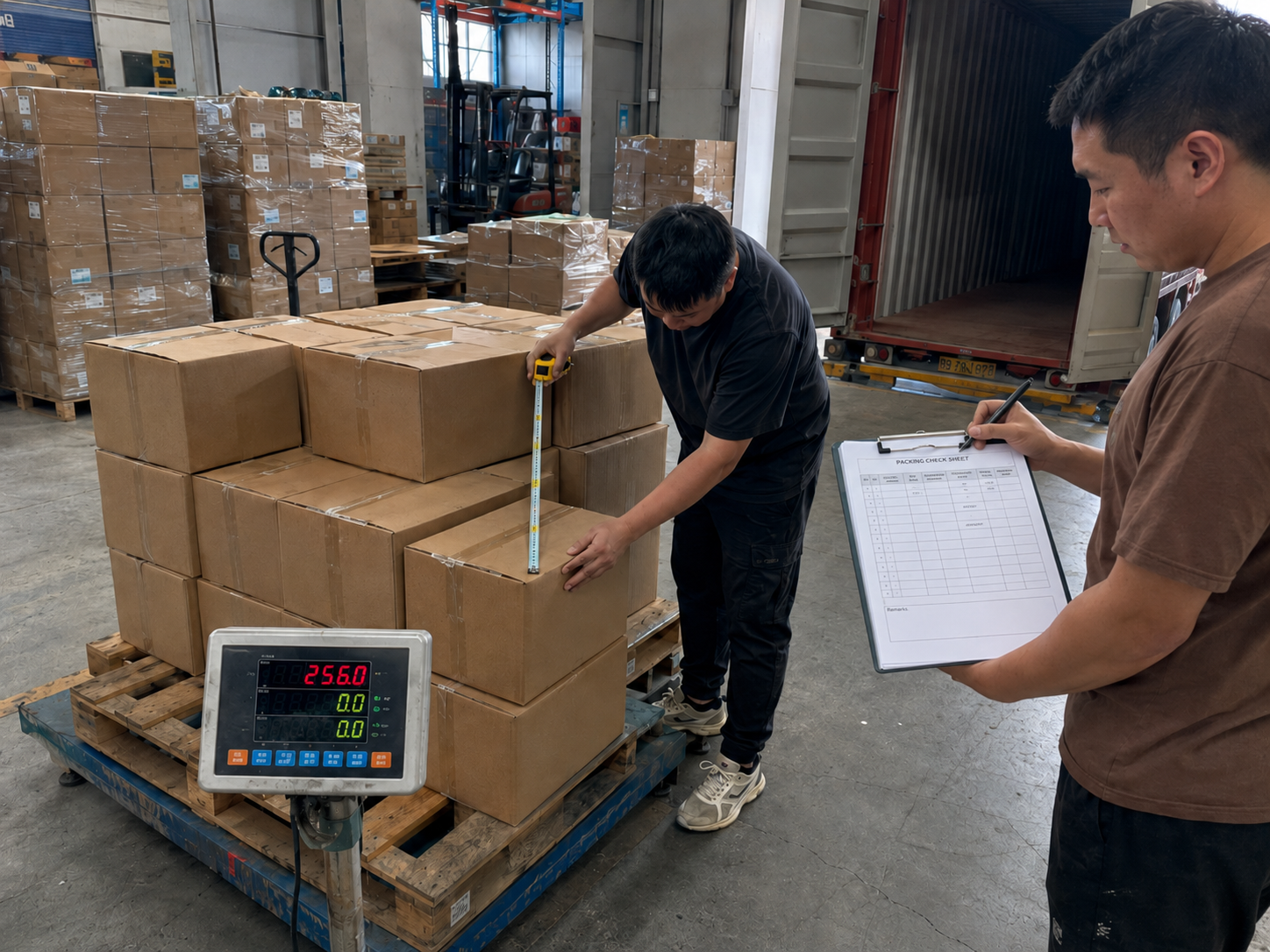
Air freight is usually quoted by chargeable weight, not just by actual weight. In practice, the carrier compares the shipment’s gross weight with its volumetric weight. The higher number becomes the chargeable weight. This is why a light but bulky shipment may cost more than a small dense shipment.
According to DHL’s guide to calculating chargeable weight, carriers compare the actual weight and the volumetric weight and use the higher figure for pricing. This is one of the most important reasons why air freight cost per kg can vary so much from one shipment to another.
Air freight pricing also changes quickly because it depends on airline capacity, route conditions, cargo type, and service level. As explained in IATA’s guide to air cargo tariffs and rules
, air cargo costs are affected by tariffs and rules that apply to each consignment. For companies that need up-to-date market information, IATA TACT Air Cargo Solutions provides real-time rates, rules, schedules, and compliance data.
What Usually Affects Air Freight Rates to Africa?
- Origin airport
- Destination airport
- Actual weight
- Volumetric weight
- Cargo type
- Transit time requirement
- Airline space availability
- Fuel and security charges
- Airport-to-airport or door-to-door service scope
Expert Tip from Okaytrans
For many Africa air shipments, the biggest pricing mistake is not the freight rate itself. It is incomplete cargo information. Wrong carton sizes, unclear delivery scope, or missing customs requirements can all lead to a quote revision later. That is why we always check cargo density, destination details, and service scope before confirming a final price.
How Sea Shipping Cost Per KG Really Works
Many buyers ask for a “sea freight cost per kg,” but sea freight is not always quoted in a simple per-kg format. For LCL shipments, pricing is often linked more closely to cargo volume and chargeable weight logic. For FCL shipments, the rate is usually based on the container, not only on the shipment weight. As shown in DHL’s chargeable weight guide , LCL sea freight commonly follows a 1:1 volume-to-weight logic, while FCL pricing is typically charged per container. This means sea freight cost per kg is often only a rough way of comparing options, not the actual pricing method used by the carrier or freight forwarder. Another important point is that ocean freight quotes often include more than the basic freight line. According to Maersk’s rate lookup guidance , ocean prices are commonly broken down into Freight, Origin and Destination charges. That means a low base ocean rate may still lead to a higher total cost after local handling and destination charges are added.
LCL vs FCL: Which One Fits Better?
Use LCL when:
- Your cargo is too small to fill a full container
- You want to lower shipping cost for smaller loads
- Your lead time is flexible
Use FCL when:
- Your cargo volume is large
- You want more control over cargo handling
- You want to reduce cargo mixing risk
- You need more stable planning for a regular shipping program
Real-World Example
One customer shipping general cargo to East Africa first asked only for a sea freight rate per kg. After we reviewed the shipment details, it became clear that LCL pricing by volume made more sense than using a simple per-kg estimate. In another case, a buyer shipping urgent spare parts first asked about sea freight, but air freight turned out to be the better option because the cost of a stock-out was much higher than the freight difference.
Air Freight vs Sea Freight: Which Is Cheaper?
Sea freight is usually cheaper than air freight for heavy or bulky cargo. But the better question is not only which one is cheaper on paper. The better question is which one gives the lower total business cost.
Choose air freight when:
- The cargo is urgent
- The goods are high-value
- The shipment is small
- Delays would hurt sales or operations
Choose sea freight when:
- The cargo is heavy or bulky
- The lead time is flexible
- The goods are low-value or standard replenishment stock
- Cost control matters more than speed
For Africa shipments, route reliability and local logistics conditions also matter. The World Bank Logistics Performance Index compares countries across customs, infrastructure, logistics competence, tracking, and shipment timeliness. This is useful because the same product may face very different logistics outcomes depending on the destination country.
At the same time, the ocean market remains sensitive to disruption. UNCTAD’s Review of Maritime Transport 2025 highlights how turbulence, rerouting, and structural changes continue to affect maritime transport. This is another reason why sea freight can be cost-effective, but not always simple or fully predictable.
A Simple Decision Framework
- How urgent is the cargo?
- What is the cargo value?
- Is the shipment heavy, bulky, or compact?
- How important is delivery speed?
- What is the cost of delay to the business?
For many importers, a mixed strategy works best: send samples or urgent stock by air, then move the larger volume by sea once demand is stable.
What Hidden Costs Affect Your Final Shipping Price?
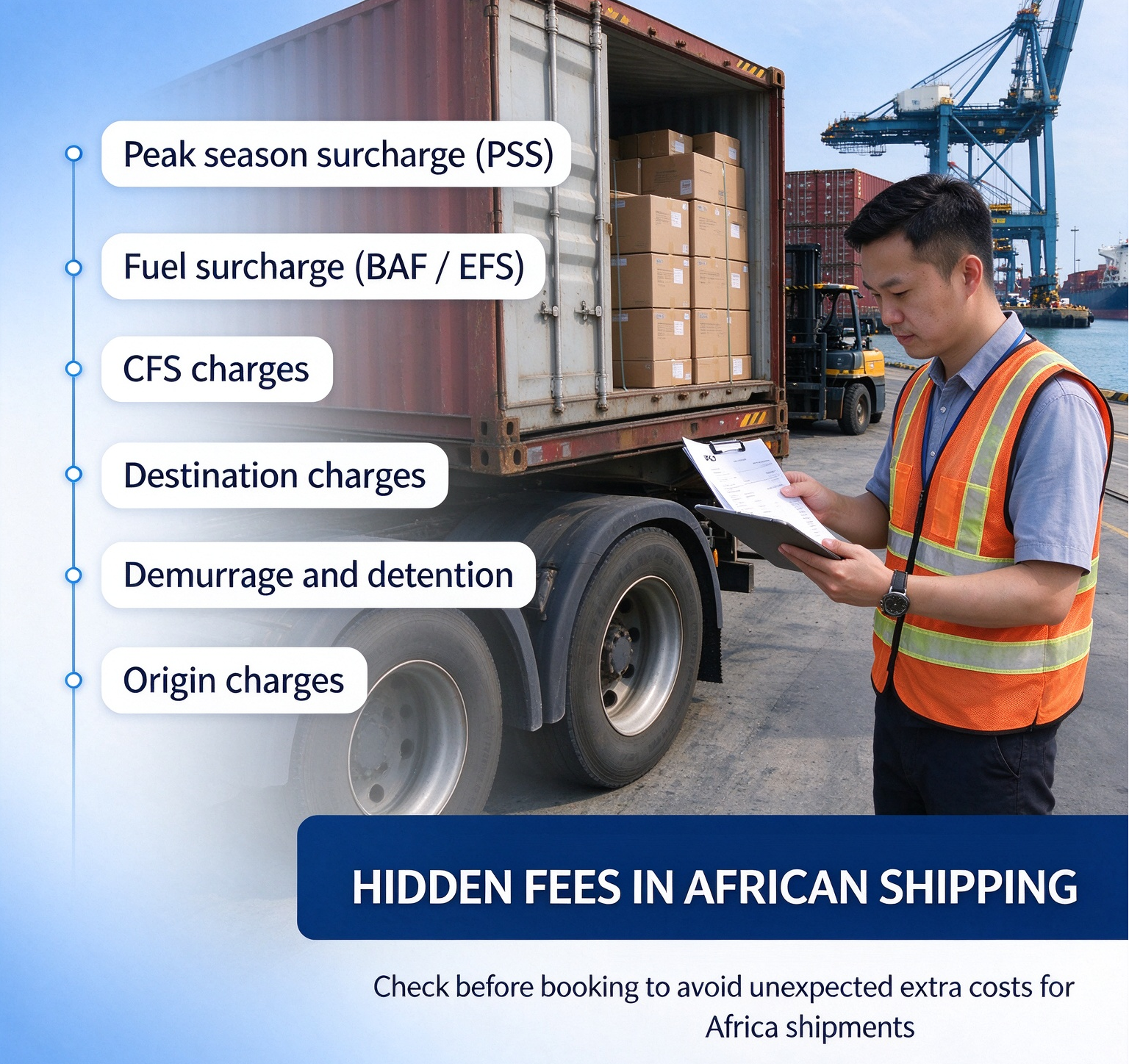
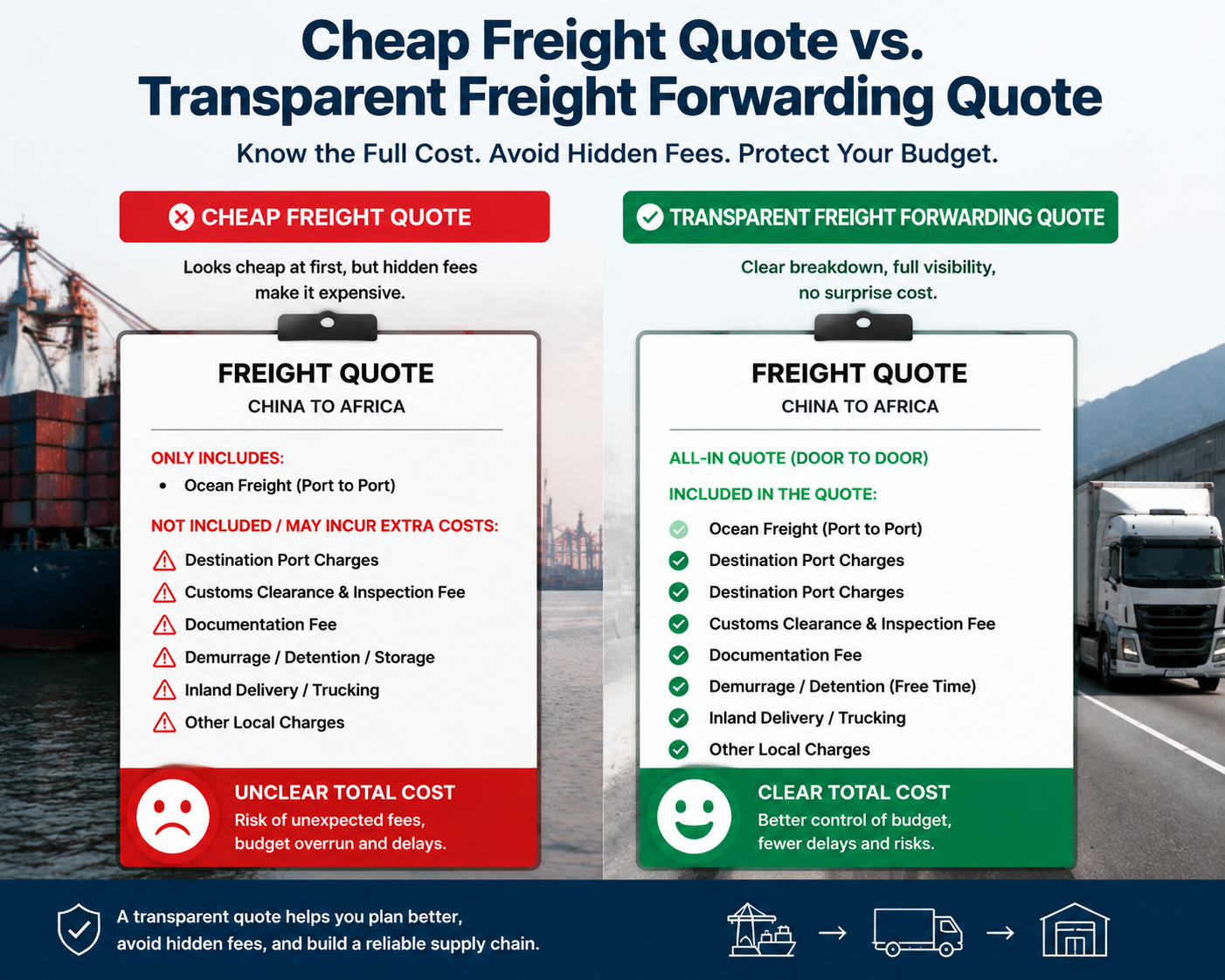
Many buyers focus only on the headline freight rate, but the final shipping price often includes several extra charges. These can include fuel surcharges, handling fees, destination fees, customs clearance charges, documentation fees, and local delivery costs. As noted in Maersk’s Peak Season Surcharge overview , ocean rates may also be subject to other applicable surcharges, including local charges and contingency charges. This is why the cheapest quote is not always the lowest final landed cost. For air cargo, pricing can also change based on airline rules, tariffs, and real-time market activity. This is why IATA’s air cargo tariffs and rules guide and IATA TACT Air Cargo Solutions are useful references when explaining how air freight pricing works. Another key point is the Incoterm. If the shipping term is unclear, buyers and sellers may have very different expectations about which charges are included. The ICC Incoterms® rules page is a reliable reference for understanding cost and risk allocation in international trade.
Why the Cheapest Quote Is Not Always the Best Quote
- Customs clearance
- Port or airport handling
- Documentation
- Destination fees
- Last-mile delivery
- Inspection or special cargo handling
A professional freight quote should always explain what is included and what is not.
How to Get an Accurate Air or Sea Freight Quote
If you want a useful freight quote to Africa, do not ask only for a shipping rate per kg. Instead, send the full shipment details.
Prepare these details before requesting a quote:
- Cargo name
- Number of cartons or pallets
- Package dimensions
- Total gross weight
- Origin city or port
- Destination city or port
- Cargo ready date
- Incoterm
- Customs clearance requirement
- Door delivery requirement
These details help the freight forwarder decide whether the shipment should move by air cargo, sea cargo, LCL, FCL, airport service, port service, or door-to-door shipping to Africa.
Sample Quote Request
Cargo:LED lights
Packages:20 cartons
Dimensions:50 x 40 x 35 cm each
Gross weight:220 kg
Origin:Shenzhen, China
Destination:Nairobi, Kenya
Ready date:28 April 2026
Service needed:airport to airport / door delivery / customs clearance
Incoterm:EXW or FOB
From our experience, quote errors usually happen because the shipment details are incomplete at the start, not because the freight market changed overnight.
Example Shipping Scenarios
Example 1: Small Urgent Electronics Shipment
A buyer needs fast-moving electronics for a retail launch in Africa. The cargo is not very heavy, but delivery timingmatters. In this case, air freight may be the better option because the cost of delay could be higher than the freight premium.
Example 2: Heavy General Cargo for Restocking
A buyer is shipping standard stock with flexible timing. The cargo is dense and bulky. Sea freight, especially LCL or FCL depending on volume, is usually the better value choice.
Example 3: Mixed Shipping Strategy
A buyer sends samples or urgent stock by air, then sends the bulk order by sea after the market response is confirmed. This strategy can reduce risk and improve cash flow while keeping the supply chain flexible.
So, How Much Does Air and Sea Shipping Cost Per KG?
The real answer is simple: the cost per kg for air and sea shipping to Africa depends on the shipment, not just the weight.
Air freight is usually priced by chargeable weight and changes based on airline rules, capacity, route, and service scope. Sea freight is usually more cost-effective for larger shipments, but it is not always quoted in a true per-kg format. It may be based on volume, container use, and separate origin and destination charges.
So instead of asking for one generic shipping rate to Africa, the smarter step is to request a tailored quote based on your product, dimensions, timeline, and delivery needs. That gives you a more accurate price and a better shipping plan.
At Okaytrans , we help importers compare air cargo to Africa , sea cargo to Africa , and door-to-door shipping to Africa so they can balance speed, cost, and reliability in one practical solution.
FAQ
How much does air freight cost per kg to Africa?
There is no fixed air freight cost per kg to Africa. The price depends on chargeable weight, route, cargo type, airline space, and service scope.
Is sea freight always cheaper than air freight?
Sea freight is usually cheaper for heavy or bulky cargo, but it is not always the better business choice. If your shipment is urgent or high-value, air freight may still be the smarter option.
Why is my freight quote different from another supplier’s quote?
Freight quotes often differ because the service scope is different. One supplier may include origin, destination, customs, or local delivery charges, while another may quote only the main freight leg.
Does sea freight to Africa really charge by kg?
Sea freight to Africa does not always charge strictly by kg. LCL often follows volume-based or chargeable-weight logic, while FCL is usually charged on a per-container basis.
What should I prepare before asking for a freight quote to Africa?
Prepare the cargo name, package count, dimensions, weight, origin, destination, cargo ready date, Incoterm, and delivery requirements. The more complete the information is, the more accurate your freight quote will be.