If you buy from several suppliers and ship to Africa, a consolidation service can help you combine cargo into one clearer and more cost-effective shipment plan. In this guide, you will learn what cargo consolidation service means, who needs it most, how the process works, and how to choose a provider that can really manage multi-supplier shipments. You will also see why consolidation matters even more for Africa-bound cargo, where better origin control often leads to fewer destination problems.
Many importers ask a simple question: Do you offer consolidation service? In real business, the question behind it is usually much bigger. They want to know whether a logistics partner can collect cargo from different suppliers, check it in one warehouse, organize it correctly, and ship it to Africa under one coordinated plan. That is the real value of consolidation. It is not just about putting goods together. It is about reducing confusion, improving control, and making shipping easier to manage.
What Is a Consolidation Service in International Shipping?
A cargo consolidation service means collecting goods from different suppliers and combining them into one organized shipment. In most cases, the cargo is first sent to a warehouse, where it is received, checked, sorted, and prepared before export. This process is often used by importers who buy from more than one supplier but want one shipment instead of many separate ones.
This is why consolidation is different from simple freight booking. A true buyer’s consolidation service may include supplier coordination, warehouse receiving, cargo inspection, carton counting, relabeling, repacking, palletizing, loading planning, and shipment follow-up. For the importer, the goal is simple: fewer moving parts and better control. As explained in DSV’s buyer’s consolidation overview, consolidation can help reduce cargo handling, improve shipment transparency, and make better use of container space.
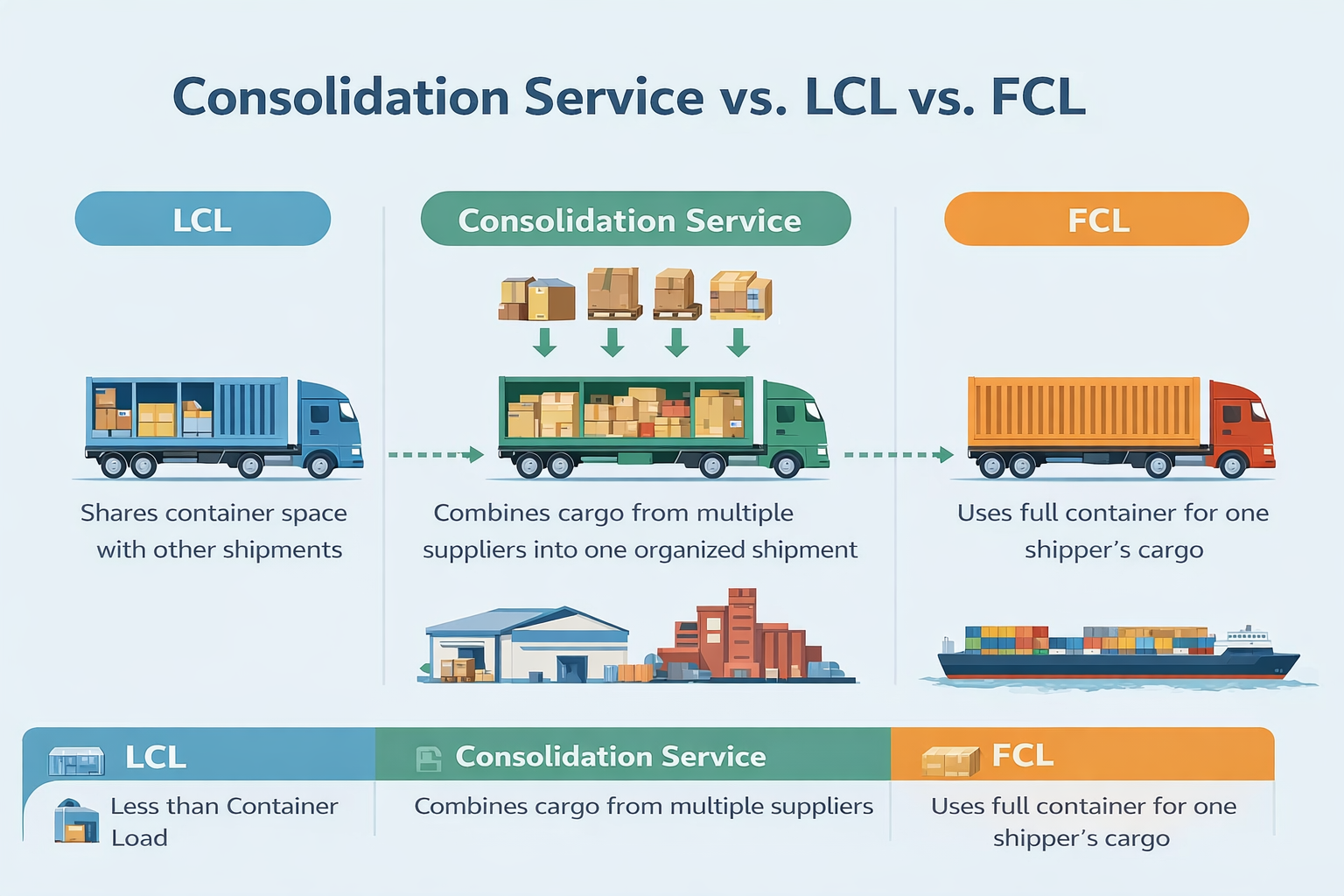
Consolidation vs. LCL vs. FCL
These three terms are connected, but they are not the same.
LCL means your cargo shares container space with other shipments.
FCL means your cargo uses a full container.
Consolidation service is the process of combining cargo from multiple suppliers into one better-managed shipment plan.
In some cases, a consolidation service still leads to an LCL shipment. In other cases, it helps importers combine enough cargo to move in a fuller container plan. That is why warehouse consolidation in China is often useful for buyers who source from several factories at the same time.
Who Needs Consolidation Service the Most?
A consolidation service is a strong fit for importers who buy from multiple suppliers but do not want each supplier to ship separately. This often includes wholesalers, project buyers, retailers, construction material importers, hotel and furniture buyers, trading companies, and SMEs that cannot fill one container from a single factory.
It is especially useful when cargo is ready on different days, comes from different cities, or needs to be checked before export.
For Africa importers, this service is often even more valuable. Many shipments become difficult not because the goods are hard to transport, but because the origin process is too fragmented. When five suppliers all ship separately, the buyer ends up managing five different updates, five different shipment schedules, and often more destination handling than necessary. A cargo consolidation service to Africa helps reduce that complexity.
Typical Signs You Need Consolidation
You probably need to consolidate cargo from multiple suppliers if:
your suppliers are in different cities;
your total cargo is too small for one supplier to fill a container alone;
you want one export plan instead of several small bookings;
you need cargo checking, relabeling, or repacking before shipping;
you want fewer cargo handling issues after arrival in Africa.
How Our Consolidation Service Works
At Okaytrans, we offer consolidation service for Africa shipments with a strong focus on cargo control before export. In our experience, most shipment problems do not begin at sea. They begin at origin, when cartons are not checked, labels do not match, or suppliers ship on different schedules without one clear plan.
1. Supplier Coordination
We first collect shipment details from each supplier. This usually includes cargo readiness, carton count, dimensions, packing lists, and delivery or pickup arrangements. This step helps turn many supplier updates into one manageable shipment plan.
2. Warehouse Receiving
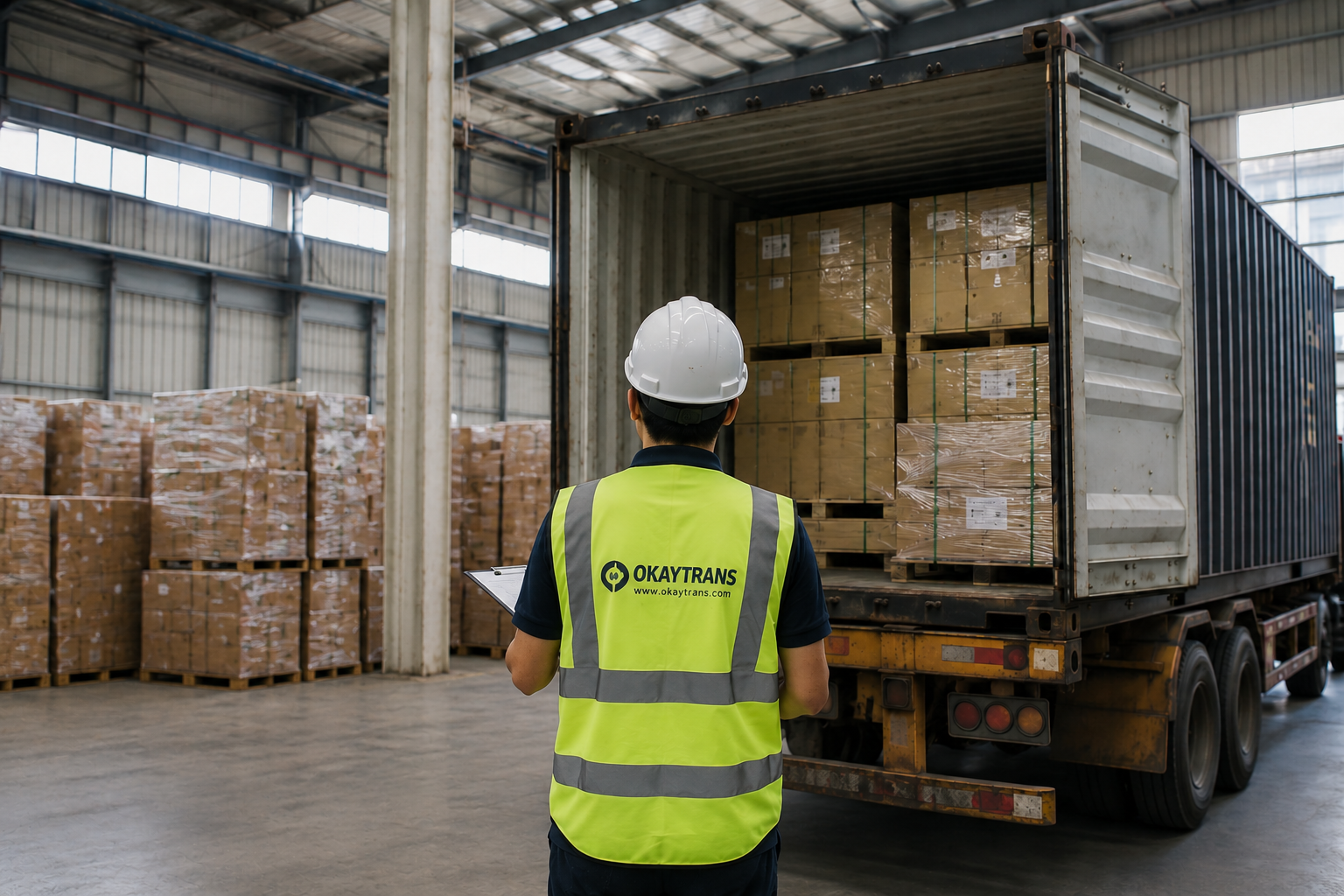
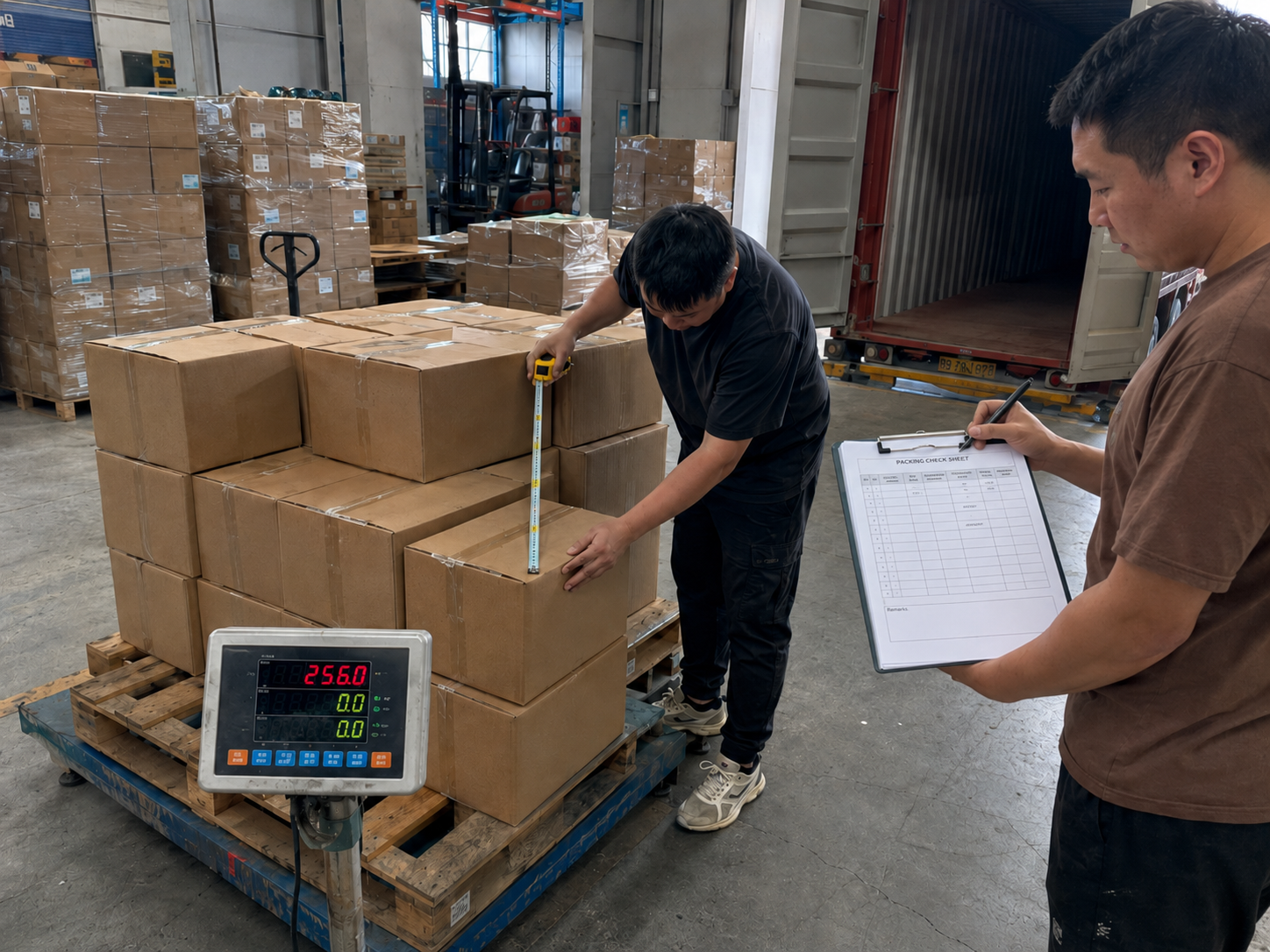
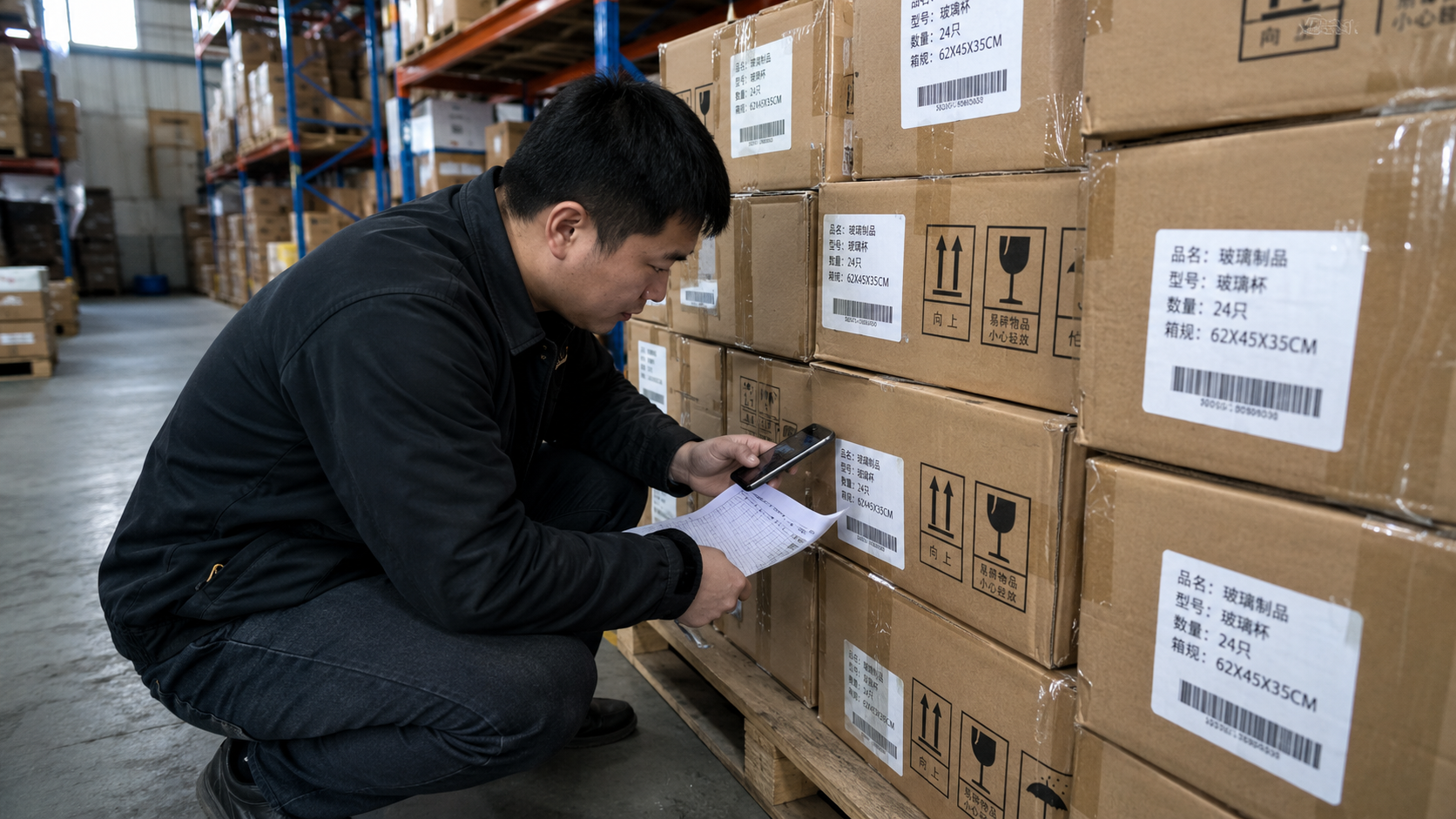
Once the cargo arrives at the warehouse, we receive and verify it against the shipping documents. We check quantity, outer packing condition, labels, and visible cargo issues. This matters because small mistakes at this stage can become bigger problems later.
3. Inspection, Sorting, and Relabeling
If needed, the cargo is sorted by shipment, SKU, customer request, project, or destination. We can also support relabeling and carton identification where better shipment clarity is needed.
4. Repacking and Cargo Protection
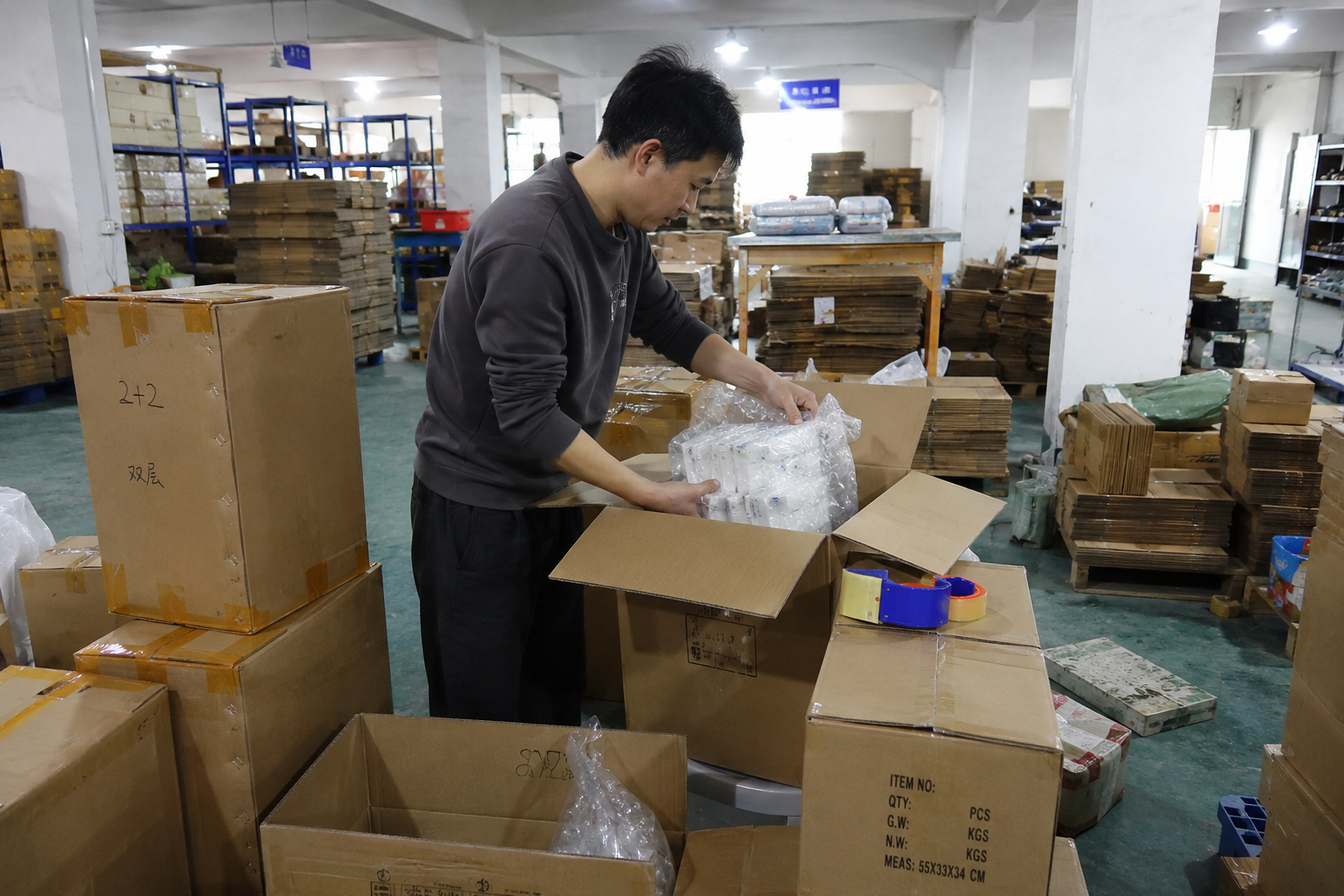
Some cargo arrives in weak or inconsistent packaging. For long-distance shipping to Africa, this can create avoidable damage risks. When needed, we can support repacking, outer carton reinforcement, or palletizing to improve cargo stability.
5. Consolidation and Loading Plan
After all cargo is received and checked, we prepare the final consolidation plan. This is based on total volume, weight, packing condition, shipment priority, and route requirements. The goal is not only to combine cargo, but to create a shipment that is more efficient and easier to manage.
6. Shipment Follow-Up
After loading and export arrangement, we continue follow-up so the buyer has one clearer shipment view. This is much easier than tracking several supplier-level movements separately.
Expert Insight
In Africa-bound projects, we usually check carton marks and packing lists before the cargo is fully consolidated. That is because many downstream delays come from simple upstream errors, such as missing labels, unclear cargo counts, or supplier documents that do not match what actually arrived at the warehouse.
Key Benefits of Using Consolidation Service for Africa Shipments
Lower Total Logistics Cost
A consolidation service does not only reduce freight cost. In many cases, it lowers the total logistics cost by reducing repeated handling, repeated export processes, and multiple separate shipment arrangements. When cargo is shipped under one coordinated plan, the importer often saves both money and management time.
Better Cargo Control
When all cargo is received in one place, it becomes easier to spot missing cartons, incorrect labels, weak packaging, or supplier mistakes before export. This improves shipment accuracy and reduces surprises later.
Simpler Supplier Management
Without consolidation, one buyer may need to manage several shipment threads at once. With consolidation, the shipment becomes more centralized and easier to follow.
Fewer Handling Problems at Destination
For shipments to Africa, origin control matters a lot. When cargo is better organized before export, there are often fewer handling issues after arrival. This is one of the main reasons many importers prefer buyer’s consolidation service over several disconnected LCL bookings.
Better Planning in an Unstable Shipping Market
Freight markets are not always stable. Sailing schedules change, suppliers delay cargo, and handling conditions are not always predictable. A better consolidation plan gives the importer more control even when the market is less stable. This is also why UNCTAD’s Review of Maritime Transport 2025 continues to highlight the importance of supply chain reliability and resilience in global shipping.
Common Consolidation Challenges — and How We Solve Them
Even a good consolidation plan can face problems. The difference is whether the logistics team can solve them early.
Different Suppliers Are Ready at Different Times
This is normal. One supplier finishes today, another next week. The solution is to set a realistic cargo cutoff and shipment window early, instead of waiting until the last moment.
Packing Lists Do Not Match Actual Cargo
This happens more often than many buyers expect. That is why warehouse receiving checks matter. We compare what arrives with what was declared, so issues can be found before shipping.
Packaging Is Not Suitable for Long Transit
Some factory packaging is enough for local transport, but not for export. For Africa shipments, repacking or reinforcement can make a big difference.
Too Many Small Shipments Create Too Much Complexity
This is one of the biggest reasons buyers use warehouse consolidation in China. Too many separate shipments often mean too many updates, too many files, and too many destination handling steps.
Mini Case
One West Africa customer sourced building materials and accessories from six suppliers in China. Before using consolidation, each supplier planned to ship separately. That would have created multiple shipment instructions, multiple arrival batches, and more handling at destination. After moving to one coordinated consolidation plan, the customer reduced separate origin shipping instructions from six to one and gained a much clearer cargo overview before export.
Why Consolidation Matters More for Africa-Bound Cargo
Shipping to Africa often requires stronger planning from the start. In many cases, the farther the cargo travels, the more expensive small origin mistakes become. A wrong label, weak carton, missing count, or poor loading decision may not seem serious at pickup, but it can create delays, confusion, or extra handling later.
That is why a consolidation service for Africa shipping is not just a freight option. It is a control tool. It helps importers reduce fragmentation before the goods leave origin.
For many Africa buyers, the real benefit is not only lower cost. It is better shipment visibility, better cargo readiness, and fewer problems when the cargo reaches its next stage. This also matches what the World Bank Logistics Performance Index shows: logistics quality and coordination play a major role in international trade performance.
How to Choose the Right Consolidation Service Provider
Not every freight forwarder offers a real consolidation service. Some only book freight space. A real provider should be able to support cargo handling at origin as well.
Here are the questions buyers should ask:
Do They Have Warehouse Capability?
A provider should be able to receive, check, sort, and manage cargo physically, not only on paper.
Can They Inspect and Report Cargo Clearly?
You need visibility into what arrived, what was missing, and what needed correction.
Do They Understand Africa Shipments?
This matters. A provider with Africa shipping experience usually understands why origin control is so important.
Can They Support Repacking or Cargo Improvement?
Weak cargo preparation can create more problems later. The provider should be able to fix issues before export when needed.
Do They Communicate Well?
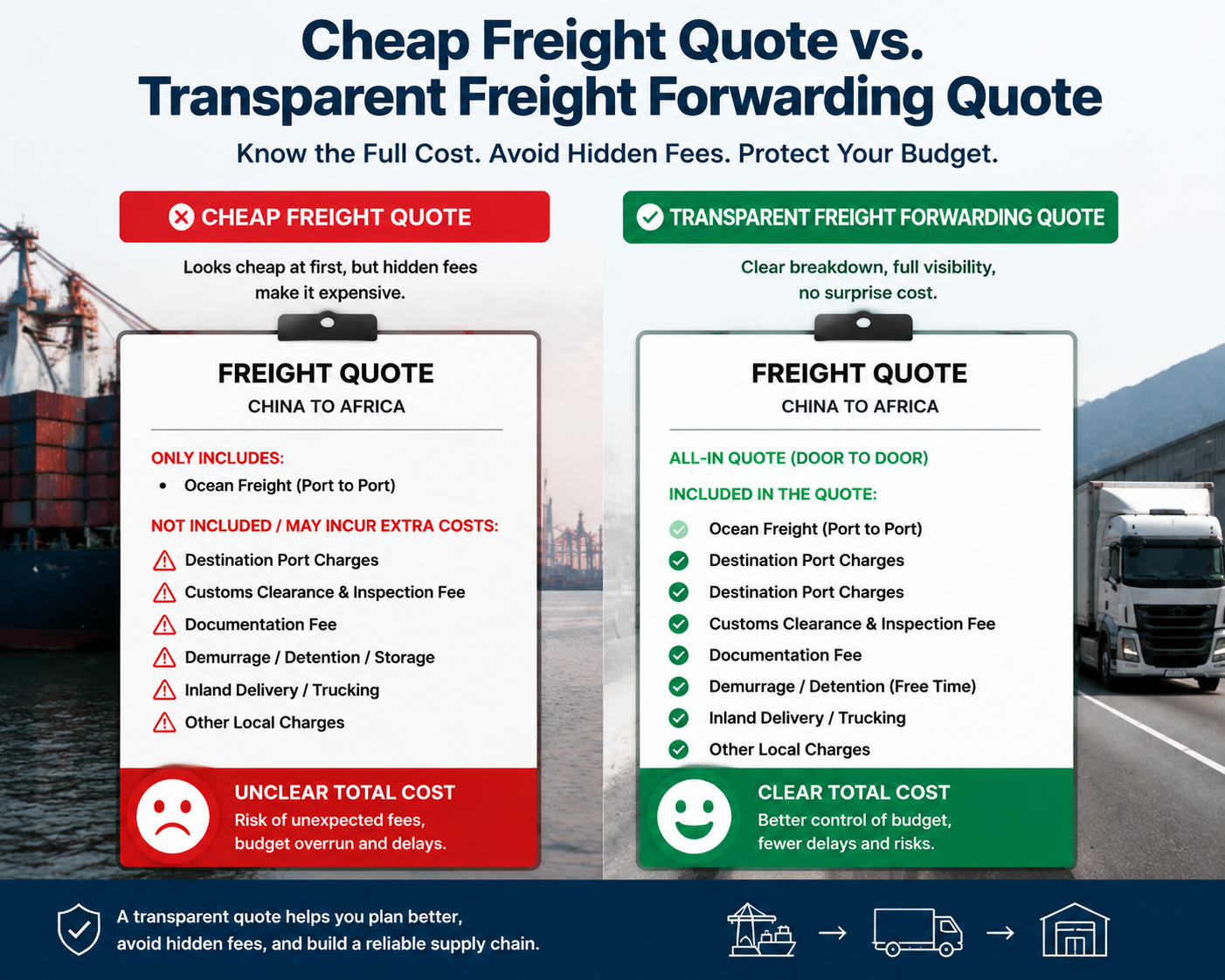
A cheap quote is not enough. Good communication and cargo visibility are often more valuable than a low price without control.
How Okaytrans Supports Consolidation Shipments to Africa
Okaytrans provides cargo consolidation service for customers who source from multiple suppliers and need one coordinated shipment to Africa. We support cargo collection planning, warehouse receiving, cargo inspection, sorting, repacking support, consolidation planning, and shipment follow-up.
Our goal is to help importers reduce shipment confusion and build one clearer shipping plan from origin to destination. If your cargo is coming from different suppliers and you need one organized export process, our team can help you plan the right solution.
Call to Action
If you are buying from multiple suppliers in China and need one coordinated shipment to Africa, talk to Okaytrans. We can help you collect, check, consolidate, and ship your cargo under one clearer process.
Video Resource
If you want a simple visual introduction to shared-container shipping, you can also watch this Freightos LCL shipping webinar before deciding whether LCL or consolidation is the better fit for your cargo plan.
Conclusion
So,do you offer consolidation service? Yes — but the better answer is this: a good consolidation service should do much more than combine cartons. It should help you collect cargo from multiple suppliers, improve shipment visibility, reduce repeated handling, and make Africa shipping easier to manage.
If you are shipping from several suppliers and want one cleaner plan instead of many disconnected bookings, a cargo consolidation service to Africa can be the smarter option. For many importers, it is not just a shipping method. It is a better way to control the whole process.
FAQ
What is a consolidation service in shipping?
A consolidation service means collecting cargo from different suppliers into one warehouse, checking it, and combining it into one better-managed shipment.
Is consolidation service cheaper than shipping separately?
In many cases, yes. It can reduce repeated handling, repeated shipment arrangements, and other extra logistics costs.
Can you consolidate cargo from multiple suppliers and ship it to Africa under one plan?
Yes. This is one of the most common uses of consolidation service, especially for importers sourcing from different factories in China.
How long does cargo consolidation take?
It depends on supplier readiness, warehouse receiving time, repacking needs, and the final shipping schedule.
What should I check before choosing a consolidation service provider?
Check warehouse capability, cargo inspection process, repacking support, communication quality, and Africa shipment experience.