What you’ll learn (in 7–10 minutes):This guide breaks down six core freight forwarder services —what they are, how they save time and money , and how to use them to cut delays and hidden costs. You’ll also get a vendor checklist, a document pack list, and Africa/emerging-market tips. Authoritative references used throughout:Freightos: What Services Do Freight Forwarders Offer?•Crowley: Freight Forwarding Guide •Freight Forwarder Services •WTO Trade Facilitation Agreement •ICC Incoterms® Rules.
Quick navigation:
Core Service #1 — Transport Planning & Carrier Procurement
Core Service #2 — Customs Brokerage & RegulatoryCompliance
Core Service #3 — Documentation & Trade Finance Support
Core Service #4 — Warehousing, Consolidation& Distribution
Core Service #5 — Cargo Insurance & Risk Management
Core Service #6 — Visibility, Data &Exception Management
How to Choose the Right Freight Forwarder (Vendor Checklist) Cost & Savings Map (Total Landed Cost) Africa & Emerging Markets Spotlight
Core Service #1 — Transport Planning & Carrier Procurement
Why it matters:Capacity gets tight in peak seasons. The wrong mode or route can add weeks and surprise fees.
What a forwarder does
Mode & route design:Compare ocean vs. air, direct vs. transshipment, and intermodal options to hit your target lead time.
Space & rate negotiation:Blend contract and spot capacity; secure allocations during peak weeks; manage GRI/BAF and other surcharges.
Transit time vs. cost: Build a trade-off model so teams see ETA impact per extra dollar.
Quick decision tree
Delivery promise ≤7–10 days or high value/urgent? →Air (or sea–air hybrid).
Stable demand, cost-sensitive, cubic cargo? →FCL/LCL ocean.
Irregular lanes or new markets? →Trial LCL + air for exceptions, then graduate to FCL.
What to prepare (for faster quotes)
Origin/destination, dims/weight, stackability, target ETA, Incoterms.Reference: Role of forwarders in capacity procurement—see Crowley: Freight Forwarding Guide.
Core Service #2 — Customs Brokerage & Regulatory Compliance
Risk reduced:Mis-declared HS codes, wrong Incoterms, or missing permits cause fines and rollovers.
What a forwarder does
HS classification & Incoterms alignment: Match product description with HS codes; ensure CI/PL/BL fields are consistent; clarify DDP vs. DAP tax liability.
Entry filing & pre-clearance: File entries pre-arrival, prep for inspections, manage customs queries.
Market nuances:Country-specific permits, conformity assessment, valuation methods, and import restrictions.
Download-ready checklist
Commercial Invoice, Packing List, BL/AWB, Certificate of Origin, permits/licenses, inspection certificates.
What to prepare
Product description + HS suggestion, value/currency, importer details, permits (if any).
References:Freightos: Forwarder Services•Freight Forwarder Services.
Core Service #3 — Documentation & Trade Finance Support
Why it trips teams up:Banks and authorities reject documents for small mismatches.
What a forwarder does
Commercial docs suite:Clean CI/PL, correct BL or AWB issuance, COO formatting, inspection certificates.
Government filings: For example,AES/EEI for U.S. exports when thresholds apply.
LC alignment: Map UCP600 requirements to your documents to avoid discrepancies.
Zero-error document tips
Exact matches for shipper/consignee names, HS codes, weights, and package counts across CI/PL/BL/AWB. Use a pre-shipment audit against LC terms.
What to prepare
Draft CI/PL, consignee details, LC terms (if used), exporter IDs.
Reference:Terminology and export basics—Freight Forwarder Services.
Core Service #4 — Warehousing, Consolidation & Distribution
Where savings come from:Smarter LCL/LTL consolidation, bonded options, and last-mile planning reduce D&D and storage.
What a forwarder does
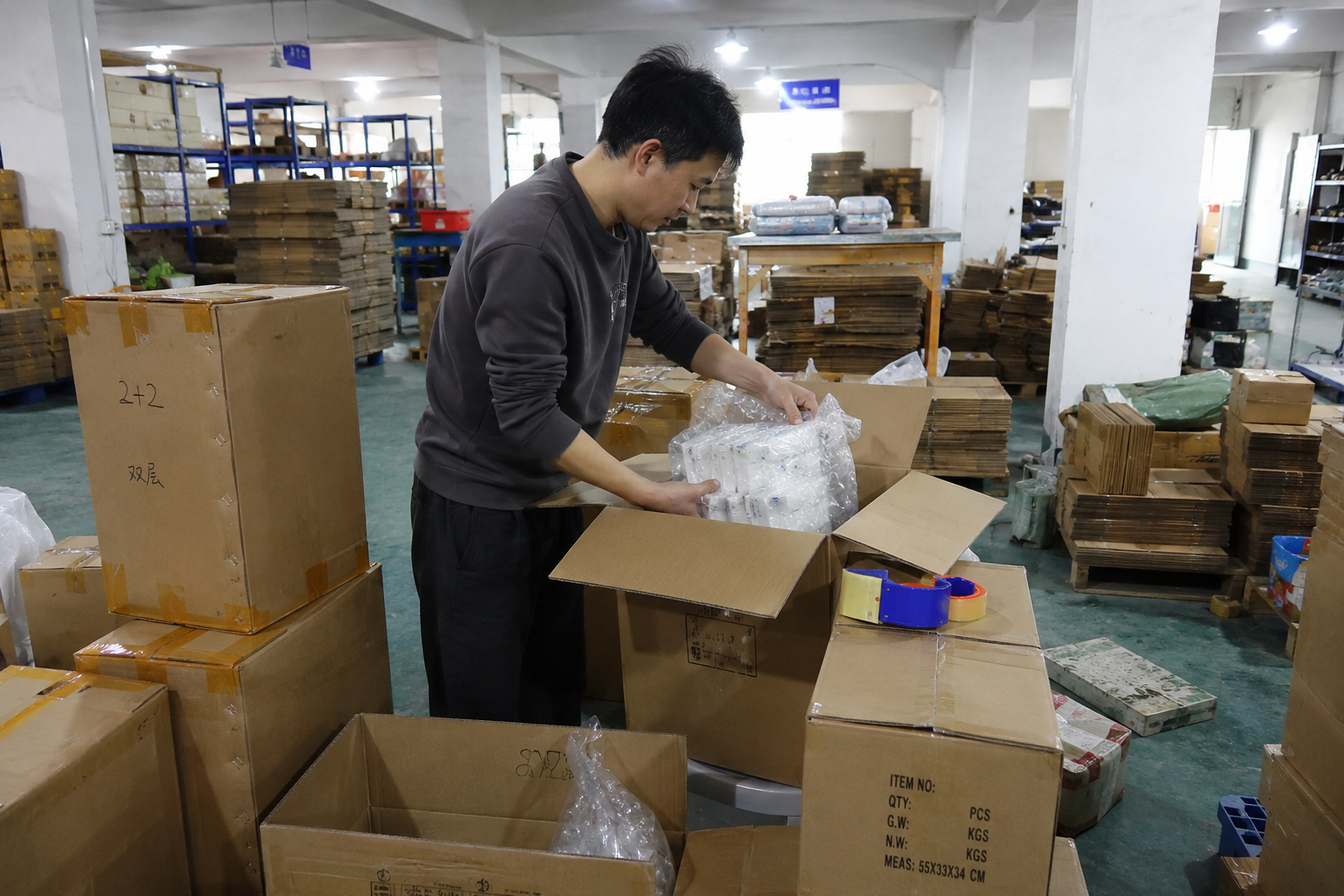
Consolidation & deconsolidation:Merge small orders by lane/SKU; choose CFS with reliable cut-offs; reduce per-unit cost.
Bonded & FTZ options: Defer duties; re-work or re-export without full import.
Destination distribution: Cross-dock, relabel, e-commerce fulfillment, scheduled milk-runs.
7 practical ways to cut D&D
Book earliest receiving window
Pre-clear documents
Use weekend/extended gate hours Assign trucker before arrival
Consider off-dock depots Monitor free-time by container Escalate holds within 24h
What to prepare
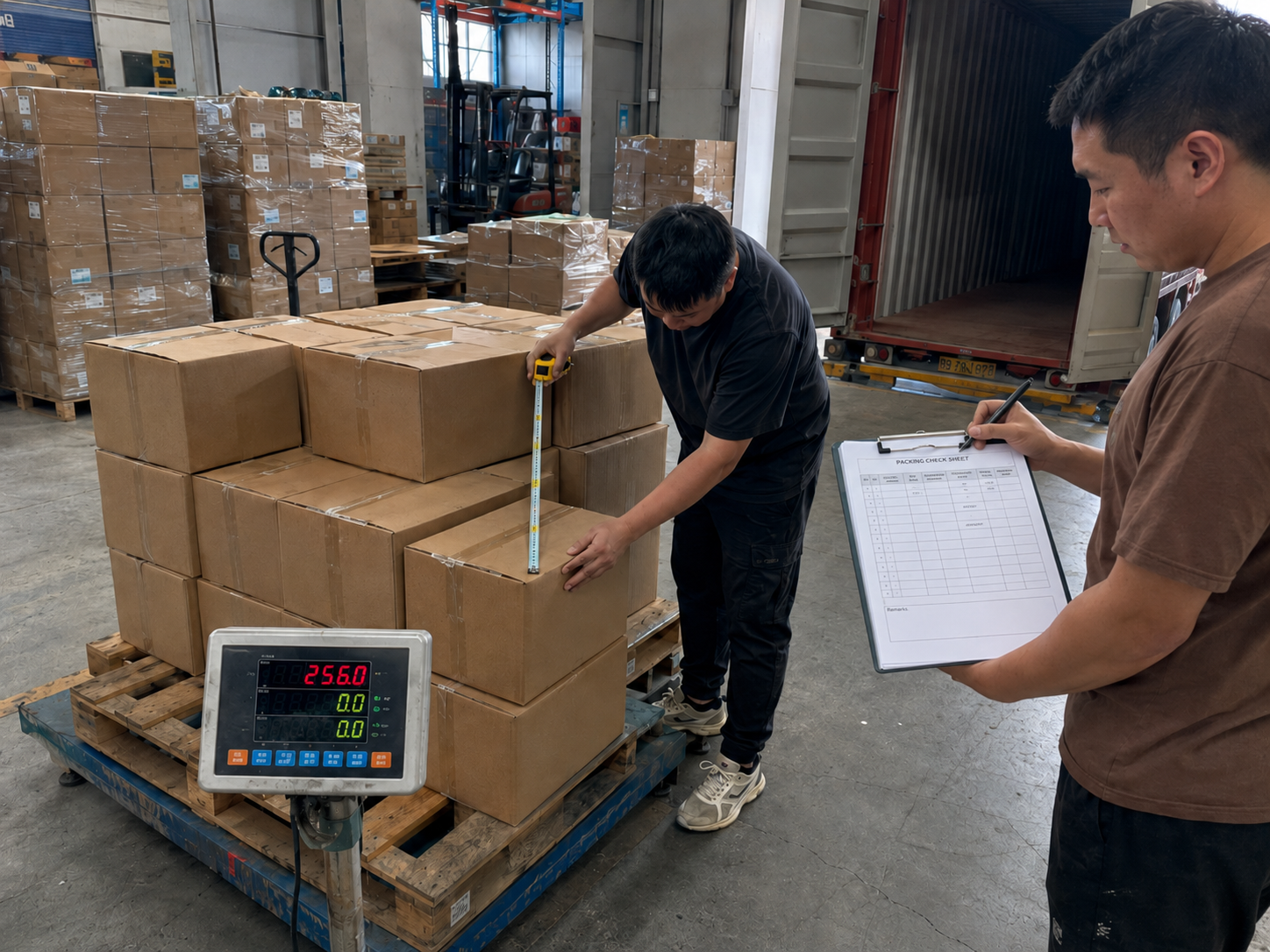
SKU list, carton/pallet plan, need for relabel/kitting, delivery appointment constraints.
References:Freightos: Forwarder Services•Crowley: Freight Forwarding Guide.
Core Service #5 — Cargo Insurance & Risk Management
Reality check: Carrier liability is limited. Without cargo insurance, a single incident can wipe out margins.
What a forwarder does
Coverage types:All-risk vs. named perils; deductibles, limits, exclusions.
Claims playbook:Evidence, timelines, who files what, and subrogation steps.
Prevention:Packaging, palletization, bracing, temp control, DG compliance.
One-page claims timeline
Notify within 3–7 days of delivery (policy-dependent). Take photos, keep packaging, get survey, submit invoices/BL/AWB/POD.
What to prepare
Cargo value, commodity risk profile, packaging type, route and seasonality.
Reference:
Insurance is a standard forwarder add-on—Freightos: Forwarder Services.
Core Service #6 — Visibility, Data & Exception Management
Why it wins trust:Everyone sees the same milestones and acts fast on exceptions.
What a forwarder does
Milestone tracking & ETA accuracy: Pickup → Gate-in → Sailed → Arrived → Released → POD; proactive ETA updates.
Alerts & playbooks: Holds, rollovers, inspections, or weather—each with an owner and SLA.
Analytics & cost control: Lane scorecards, rate baselines, surcharge watch, and post-shipment reviews.
Our SLA: First response to any exception within 2 hours; closure within 24 hours(business days).
KPI starter set
OTD, Average Cycle Time, D&D per TEU, On-hand Days, Exception Closure Time.
What to prepare
PO list, preferred milestones/alerts, data export needs (CSV/API), user access list.
Reference: Tech-enabled visibility is a differentiator—Freightos: Forwarder Services.
How to Choose the Right Freight Forwarder (Vendor Checklist)
Ask these 10 questions
Which industries/products do you know best on this lane?
Show IATA/FMC/local licenses (where applicable).
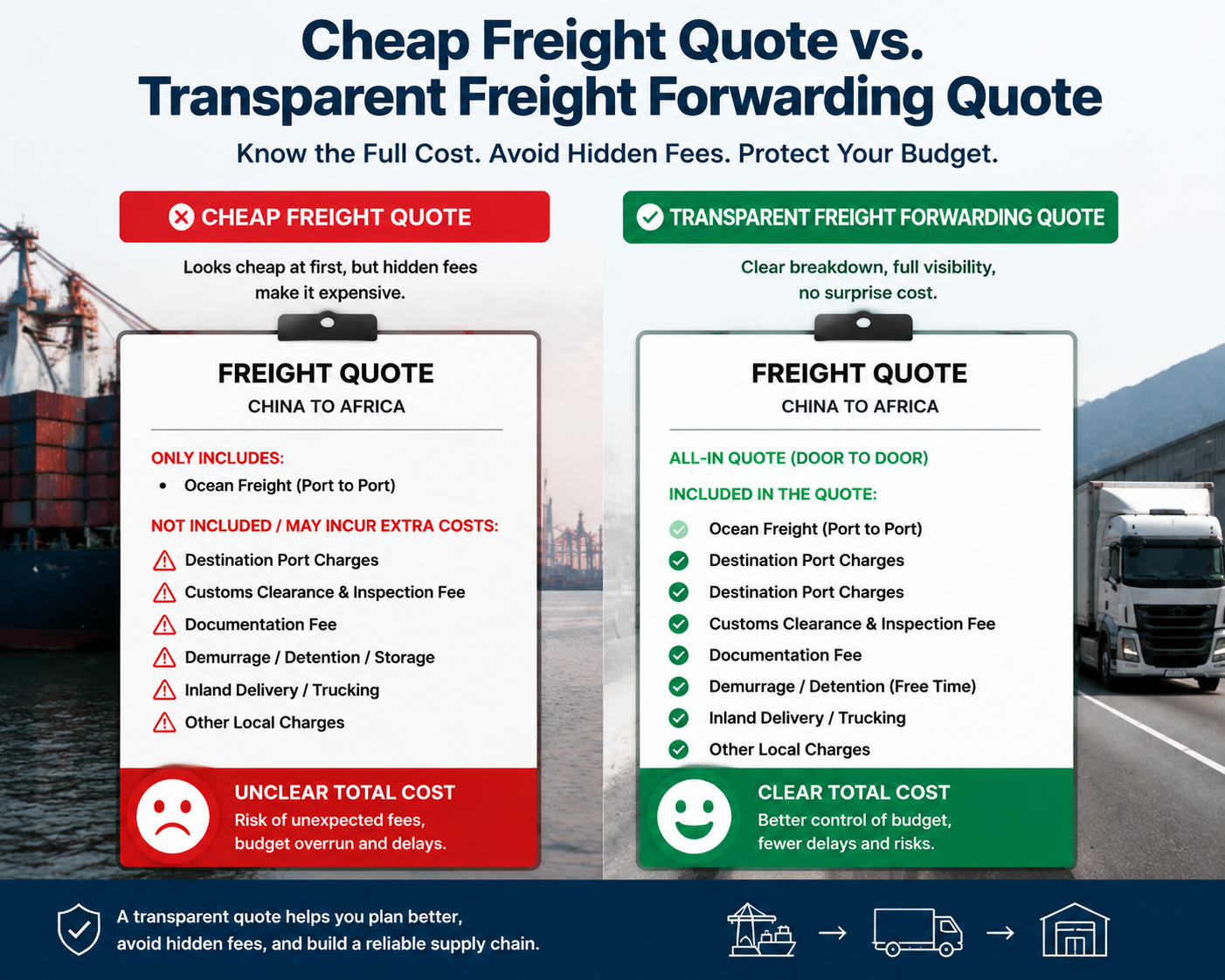
What’s included/excluded in your quote?
Peak-season space strategy?
Customs capabilities in origin & destination?
Insurance options and claim support?
Visibility platform and data export?
Average free-time and D&D prevention plan?
Reference customers for this lane?
SOP & escalation for exceptions?
What we hold: IATA / local licenses (where applicable), and on-ground partners across key African ports.
Glossary/selection tips:Freight Forwarder Services.
Cost & Savings Map (Know Your Total Landed Cost)
Cost buckets
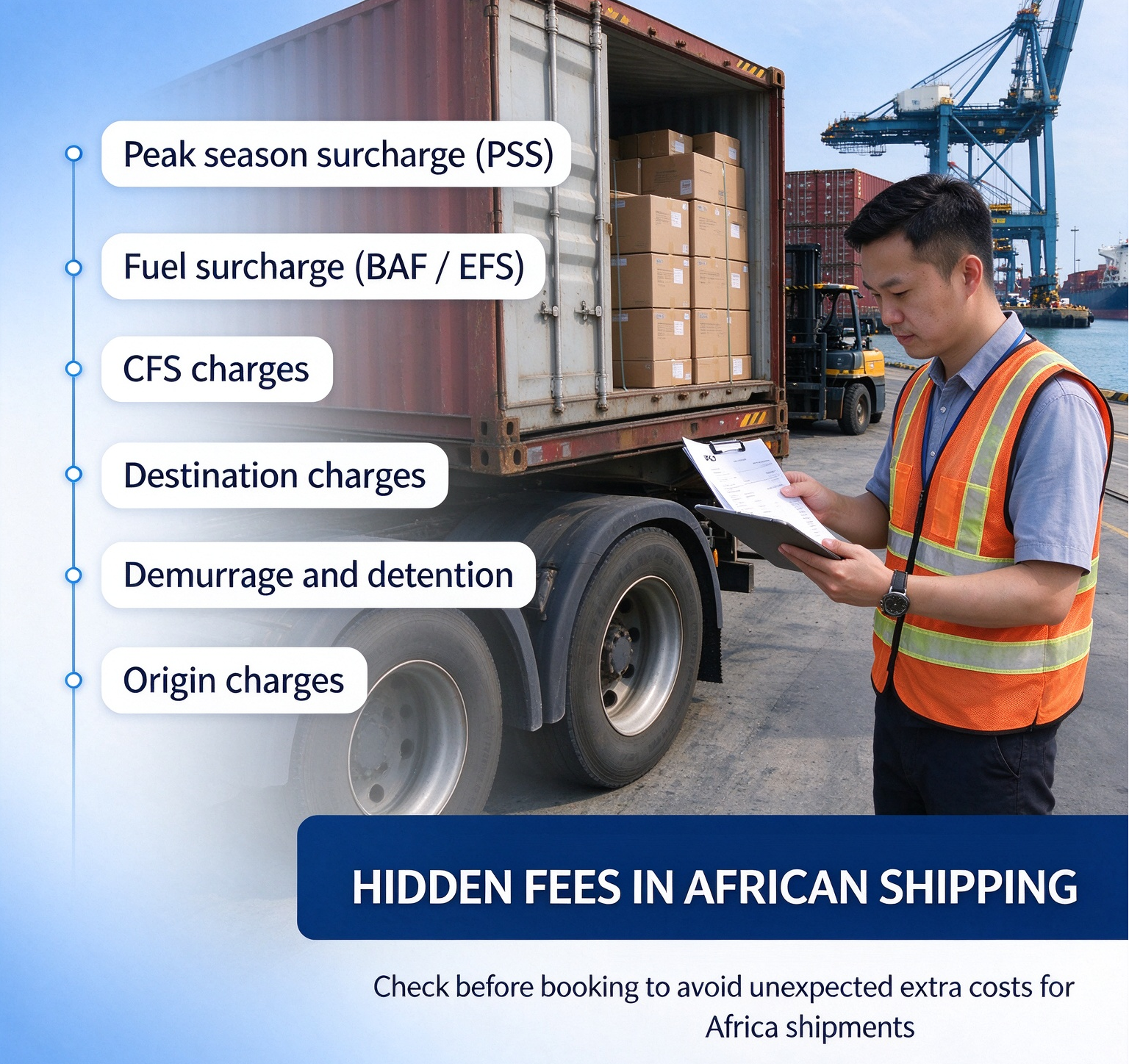
Base freight: FCL/LCL or air; check GRI/BAF/peak fees.
Port & handling: THC, documentation, delivery order.
Customs & taxes: Duties, VAT, inspection fees.
Exception costs: D&D, storage, rework, reconsignment.
Simple TCO comparison
Plan A (fast):Air + DDP for critical SKUs
Plan B (balanced):FCL+pre-clearance + early truck booking
Plan C (lean):LCL consolidation + bonded storage + scheduled last mile
Pro tip (budget control)
Track accessorials (BAF/GRI/PCS/THC/D&D) in a monthly variance report to prevent budget drift.
Useful data sources:WTO Trade Facilitation Agreement • World Bank LPI • UNCTAD Review of Maritime Transport.
Africa & Emerging Markets Spotlight
What to expect
Port rhythm & last mile:Congestion windows, road checks, and local holidays can shift ETAs.
Paper trail:Certificates of conformity, PSI, destination control documents.
Trust-but-verify:Stamp/serial verification and originals vs. copies.
Mini case (anonymized)
Without a forwarder: 2-week rollover + 6 days D&D after late truck booking.
With a forwarder: Pre-clearance + truck pre-assignment → same-day port pull,D&D = $0, ETA kept.
Conclusion & Next Steps
A freight forwarder simplifies international shipping by bundling six services—transport planning, customs & compliance, documentation, warehousing/consolidation, cargo insurance, and visibility/exception management. Use the checklists above to lower risk, speed up customs, and control total cost.
Ready to ship? Share: product description, HS code, value, dims/weight, origin/destination, Incoterms, target ETA.
Get a lane plan & quote:Okaytrans can build a door-to-door plan for your Africa and global lanes.
FAQs
Do I need a separate customs broker, or can my forwarder handle it?
Most forwarders offer customs brokerage or partner with licensed brokers, so you can use one point of contact. In strict markets, the broker must be locally licensed; your forwarder coordinates filings and inspections.
What’s the difference between a freight forwarder and a freight broker?
A forwarder manages international transport end-to-end, including documents, customs, and consolidation. A broker mainly matches shippers and carriers (often domestic trucking). For global moves, choose a forwarder with customs expertise.
When should I pick air over ocean?
Use air when lead time is under 7–10 days, the goods are high value or small/urgent, or demand is volatile. For stable, bulky cargo with flexible ETAs,ocean (FCL/LCL) gives the best unit cost. A sea–air combo can balance speed and budget.
What documents do I need for international shipping?
Start with Commercial Invoice, Packing List, BL or AWB, Certificate of Origin, and any permits or test certificates. Some exports need AES/EEI filings. Your forwarder aligns fields and files entries to prevent holds.
How do cargo insurance claims work?
Report visible loss or damage quickly (often within 3–7 days). Keep packaging, take photos, secure a survey, and submit invoices, BL/AWB, and POD. Your forwarder helps file with the insurer and may pursue carrier recovery.
Can a freight forwarder be my Importer of Record (IOR)?
Usually no. The IOR is the legal party responsible for import compliance and taxes. Some forwarders can coordinate third-party IOR services; ask about scope, fees, and liabilities.
References (authoritative, used as in-text anchors)
Freightos: What Services Do Freight Forwarders Offer?
Crowley: Freight Forwarding Guide
WTO: Trade Facilitation Agreement