When you ship goods internationally, your freight cost is not always based only on the real weight of the cargo. In most cases, logistics companies compare actual weight vs volumetric weight and use the higher one as the chargeable weight.
This article explains what actual weight and volumetric weight mean, how to calculate them, why the higher weight is used for shipping charges, and how importers can reduce shipping costs when sending goods from China to Africa.
At Okaytrans, we also use the higher value between actual weight and volumetric weight when calculating chargeable weight.Before shipment, we can help you check both weights clearly, so you know how your shipping cost is calculated.
What Is Actual Weight in Shipping?
Actual weight means the real gross weight of your cargo. It is the weight shown when the goods are placed on a scale.
For shipping,actual weight usually includes:
- Product weight
- Carton weight
- Inner packaging
- Wooden box or pallet weight, if used
- Other packing materials
Many importers only know the product net weight. But for freight calculation, logistics companies usually need the gross weight, not only the product weight.
For example, your products may weigh 80 kg, but after carton packing, the gross weight may become 88 kg. The 88 kg is the actual weight used for shipping calculation.
Expert tip from Okaytrans:
When asking for a freight quote, always ask your supplier for the packed gross weight. This helps avoid a price difference after the cargo arrives at the warehouse.
What Is Volumetric Weight?
Volumetric weight, also called dimensional weight, is calculated from the size of your cargo. It shows how much space your cargo takes during transport.
This is important because cargo space is limited. A box may be light, but if it is very large, it uses a lot of space in an aircraft, truck, or warehouse.
According to the FedEx dimensional weight calculator, dimensional weight reflects package density, meaning the space a package occupies compared with its actual weight.FedEx also explains that shipping charges may be based on dimensional weight or actual weight, whichever is greater.
Common products that may have high volumetric weight include:
- Shoes
- Bags
- Clothes in large cartons
- Foam products
- Plastic containers
- Lamps and lighting products
- Baby products
- Empty gift boxes
- Furniture parts
- Display stands
These goods are often called light but bulky cargo.
Do We Use Actual Weight or Volumetric Weight, Whichever Is Higher?
Yes.For international shipping, we use the higher value between actual weight and volumetric weight as the chargeable weight.
This is a standard rule in international logistics. The DHL chargeable weight guide also explains that chargeable shipping weight is based on the greater of dimensional weight and actual weight for domestic and international shipping products.
Here is how it works:
| Actual Weight | Volumetric Weight | Chargeable Weight |
|---|---|---|
| 100 kg | 80 kg | 100 kg |
| 100 kg | 150 kg | 150 kg |
So, when a customer asks,“Do you use actual vs volumetric weight, whichever is higher?, the answer is:
Yes. We calculate the chargeable weight based on the higher one between actual weight and volumetric weight.
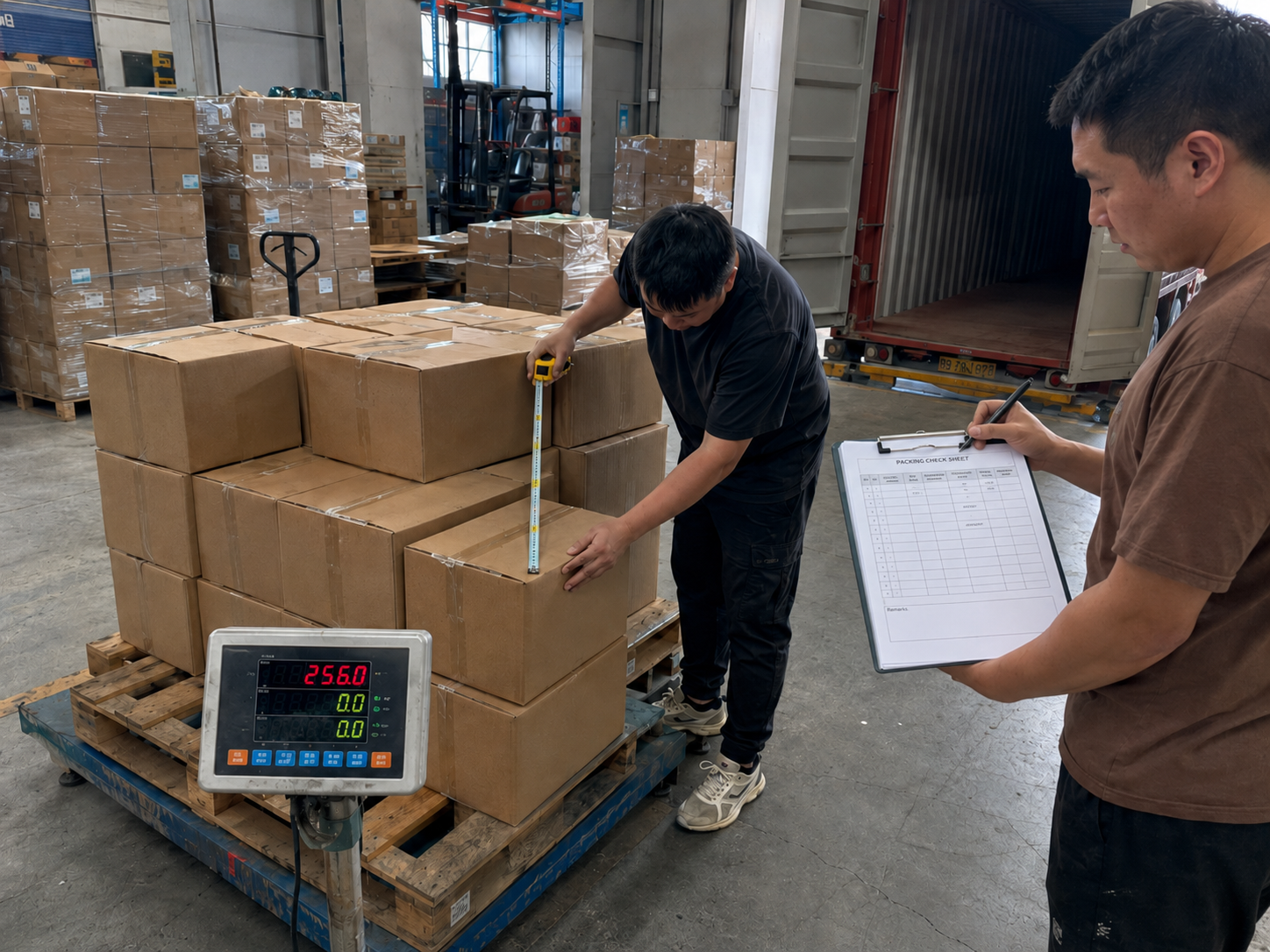
At Okaytrans, we check the carton size and gross weight before shipping. This helps importers understand the billable weight clearly before arranging cargo from China to Africa.
How to Calculate Volumetric Weight
The common formula is:
Volumetric Weight = Length × Width × Height / Divisor
When the size is measured in centimeters and the weight is measured in kilograms, a common air freight formula is:
Length × Width × Height cm / 6000
The DHL chargeable weight guide also lists 6000 as a divisor when package dimensions are measured in centimeters.
However, the divisor may change by carrier, service type, country, and shipping channel. Some express or air freight channels may use 5000, 6000, or another standard. The final rule should be confirmed before shipment.
Simple Example
Carton size:60 × 50 × 40 cm
Actual weight:15 kg
Volumetric weight:60 × 50 × 40 / 6000 = 20 kg
Now compare: Actual weight:15 kg
Volumetric weight:20 kg
The chargeable weight is 20 kg, because the volumetric weight is higher. This means the freight cost will be calculated based on 20 kg, not 15 kg.
Why Shipping Companies Charge by the Higher Weight
Shipping companies charge by the higher weight because transport capacity includes two limits:
Weight limit and space limit.
A shipment can be heavy and small. It can also be light and large. Both situations affect transport cost.
For example,a box of metal parts may be small but heavy. A box of foam products may be light but very large. If the carrier only charges by real weight, the large foam box may take too much space but bring too little income.
That is why carriers use chargeable weight. It helps balance the cost of weight and space.
This rule is especially important for air freight. According to the IATA 2024 air cargo market report, global air cargo demand grew strongly in 2024, with full-year demand up 11.3% compared with 2023. Strong demand makes space management more important for airlines and freight forwarders.
Okaytrans expert insight:
For China-to-Africa shipments, many cost differences happen not because the freight rate changes, but because the carton dimensions were not checked before quotation. A small change in carton size can increase or reduce the final chargeable weight.
Which Goods Are More Likely to Be Charged by Volumetric Weight?
Some goods are more likely to be charged by volumetric weight because they take more space than their real weight suggests.
Light but Bulky Goods
These products often have higher volumetric weight:
- Shoes
- Bags
- Clothing
- Pillows
- Foam products
- Plastic household goods
- Lamps
- Gift boxes
- Toys
- Furniture accessories
For these goods, it is very important to check carton size before shipping.
Dense Goods
These goods are more likely to be charged by actual weight:
- Hardware
- Metal parts
- Machinery parts
- Tools
- Tiles
- Stone products
- Some auto parts
Dense goods are usually heavy but do not take too much space.
How to Reduce Volumetric Weight and Save Shipping Cost
You may not be able to change the product weight, but you can often improve the packaging.
Here are practical ways to reduce volumetric weight:
Use Smaller Cartons
Do not use cartons that are much larger than the products. Empty space increases volumetric weight.
Remove Unnecessary Air Space
Ask your supplier to fill cartons properly. Poor packing wastes space and increases cost.
Compress Soft Goods
For clothes, bags, fabric products, and soft items, compressed packing may help reduce carton size.
Repack Oversized Cartons
If cartons are too large, repacking may reduce the final chargeable weight.
Compare Air Freight, Express, and Sea Freight
If your goods are large but not urgent, sea freight may be more cost-effective than air freight or express shipping.
Send Packing Details Before Quotation
To get a more accurate price, send your logistics provider:
- Product name
- Number of cartons
- Carton size
- Gross weight per carton
- Total gross weight
- Destination country and city
- Whether you need door-to-door delivery
Real case-style example:
For many lightweight bag and clothing shipments from Guangzhou or Yiwu to Africa, the first carton size provided by suppliers is often not optimized. After repacking or reducing empty space, the chargeable weight can become clearer before shipment. This helps importers reduce unnecessary shipping cost before cargo leaves China.
What Information Should You Provide for an Accurate Shipping Quote?
To calculate actual weight vs volumetric weight correctly, your freight forwarder needs clear packing information.
Please provide:
- Product name
- Total cartons
- Carton length, width, and height
- Gross weight of each carton
- Total gross weight
- Destination country
- Destination city
- Shipping method preferred
- Delivery terms, such as airport-to-airport, port-to-port, or door-to-door
- Special cargo details, if any
If the cargo is sensitive, fragile, oversized, battery-related, liquid, powder, or branded goods, tell your logistics provider in advance. Some products may need special handling or documents.
Okaytrans expert advice:
If you are not sure whether your goods will be charged by actual weight or volumetric weight, send us your packing list.Our team can calculate the chargeable weight before shipment and suggest a suitable shipping method.
Actual Weight vs Volumetric Weight for China to Africa Shipping
When shipping from China to Africa, actual weight and volumetric weight may affect different services in different ways.
Air Freight from China to Africa
Air freight is fast, but space is limited. So chargeable weight is very important. Light but bulky goods may be charged by volumetric weight.
Air freight is suitable for urgent goods, high-value products, samples, electronics, fashion products, and seasonal goods.
Express Shipping from China to Africa
Express shipping usually checks dimensional weight carefully. If your carton is large, the final billable weight may be much higher than the real weight. Express is suitable for small parcels, samples, and urgent orders.
Sea Freight from China to Africa
Sea freight is often better for large-volume cargo. It may be calculated by CBM, weight, container type, or shipping terms.
For bulky goods with lower urgency, sea freight may reduce cost compared with air freight.
Door-to-Door Shipping to Africa
Door-to-door shipping is useful for importers who want one logistics partner to handle pickup, export, freight, customs clearance, and local delivery.
At Okaytrans, we can help compare air freight, sea freight, express, and door-to-door options based on your cargo size, weight, destination, and budget.
Conclusion: Always Check Chargeable Weight Before Shipping
Understanding actual weight vs volumetric weight can help importers avoid surprise freight costs.
Actual weight is the real gross weight of your cargo. Volumetric weight is calculated from the cargo size. In most international shipping services, the final chargeable weight is based on whichever is higher.
Before shipping from China to Africa, always confirm the carton size, gross weight, and final billable weight. This helps you compare freight options more accurately and control your logistics cost.
Need to know whether your cargo will be charged by actual weight or volumetric weight? Send Okaytrans your packing list, carton size, gross weight, and destination. We can help you calculate the chargeable weight and recommend a suitable China-to-Africa shipping solution.
FAQ About Actual Weight vs Volumetric Weight
Do you charge by actual weight or volumetric weight?
We charge by actual weight or volumetric weight, whichever is higher. This higher value is called chargeable weight and is used to calculate the final shipping cost.
What is chargeable weight in shipping?
Chargeable weight is the weight used for freight billing. It is usually the higher one between the cargo’s actual gross weight and its volumetric weight. If your cargo is large but light, volumetric weight may become the chargeable weight.
How do I know if my cargo will be charged by volumetric weight?
Your cargo may be charged by volumetric weight if it is light but takes a lot of space. Examples include shoes, bags,clothes, foam products, plastic goods, lamps, and gift boxes. You can send carton size and gross weight to check before shipment.
Can I reduce volumetric weight?
Yes. You can reduce volumetric weight by using smaller cartons, removing empty space, compressing soft goods, and repacking oversized boxes. Good packaging can help lower the chargeable weight and reduce shipping cost.
Is volumetric weight used for shipping from China to Africa?
Yes. Volumetric weight is commonly used for air freight, express shipping, and some door-to-door shipping services from China to Africa. For large bulky cargo, it is important to check both actual weight and volumetric weight before confirming the shipping price.