A professional freight forwarder can provide carton dimensions and actual weight before shipping. This means your logistics partner can measure the length, width, and height of each carton, weigh the packed cartons, take photos, and confirm the final packing details before your cargo leaves the warehouse.
In this guide, you will learn what carton dimensions and actual weight mean, why they affect your shipping cost, how freight forwarders check them, and what information you should request before international shipping. You will also see how Okaytrans helps importers confirm carton size, gross weight, CBM, and chargeable weight before shipping goods from China to Africa.
What Are Carton Dimensions and Actual Weight?
Carton Dimensions Explained
Carton dimensions mean the outer size of a packed carton. They are usually shown as:
Length × Width × Height
For example:
60 × 40 × 50 cm
This means the carton is 60 cm long, 40 cm wide, and 50 cm high.
In international logistics,carton dimensions are important because carriers and freight forwarders use them to calculate cargo volume, CBM, and sometimes chargeable weight.
Actual Weight Explained
Actual weight means the real gross weight of the packed carton. It is usually checked by a scale after the goods are packed.
Actual gross weight includes:
Product weight
Inner packaging
Carton box
Bubble wrap, foam, or protection materials
Labels or other packing materials
This is why actual weight is different from product net weight. Net weight only refers to the product itself. Actual gross weight refers to the full packed carton that will be shipped. For importers, this small difference matters. If you only use the product weight, your shipping cost estimate may be wrong.
Why Carton Dimensions and Actual Weight Matter Before Shipping
They Affect Your Freight Cost
Shipping cost is not always based only on actual weight. For air freight, express shipping, and some delivery services,the final cost may be based on chargeable weight. Chargeable weight is usually the higher value between actual weight and volumetric weight.
According to the DHL guide to chargeable weight:https://dct.dhl.com/help, dimensional or volumetric weight is compared with actual weight, and the higher weight may be used to calculate
shipment cost. DHL also explains a common volumetric weight formula: Length × Width × Height ÷ 5000 when using centimeters and kilograms.
This is why large but light cartons can cost more than expected. A carton may not be heavy,but if it takes up a lot of space, the carrier may charge by volume.
They Help Avoid Surprise Charges
Supplier data is not always final. Sometimes suppliers provide estimated carton size and weight before production is fully packed. After final packing, the carton may be larger or heavier.
This can happen when:
The supplier changes carton type
Extra protection is added
Cartons become bulged after packing
Products are packed in fewer but larger cartons
Pallets or wooden cases are added later
The UPS guide to shipping dimensions and weight:https://www.ups.com/us/en/support/shipping-support/shipping-dimensions-weight.page explains that package dimensions and weight are important for calculating billable weight. UPS also notes that packages may be measured and weighed during shipping.
So, if the declared carton data is wrong, the final shipping bill may change. Confirming carton dimensions and actual weight before shipping helps you avoid last-minute cost increases.
They Support Customs, Delivery, and Warehouse Planning
Carton size and weight are not only used for freight cost. They are also useful for:
Packing list preparation
Customs document checking
Warehouse receiving
Delivery appointment planning
Container or truck loading
E-commerce warehouse inbound planning
Local delivery cost estimation
For importers shipping to Africa, this is especially important. Many shipments involve sea freight, air freight, door-to-door delivery, customs clearance, and local distribution. Accurate
carton data helps each step run more smoothly.
How Freight Forwarders Measure Carton Dimensions and Actual Weight
Step 1: Receive Goods at the Warehouse
When your goods arrive at the freight forwarder’s warehouse, the warehouse team checks the basic cargo information first.
They may confirm:
Supplier name
Number of cartons
Shipping marks
Product type
Outer carton condition
Whether the cargo matches the booking information
This first check helps reduce the risk of missing cartons, wrong cargo, or damaged packaging.
Step 2: Measure Carton Size
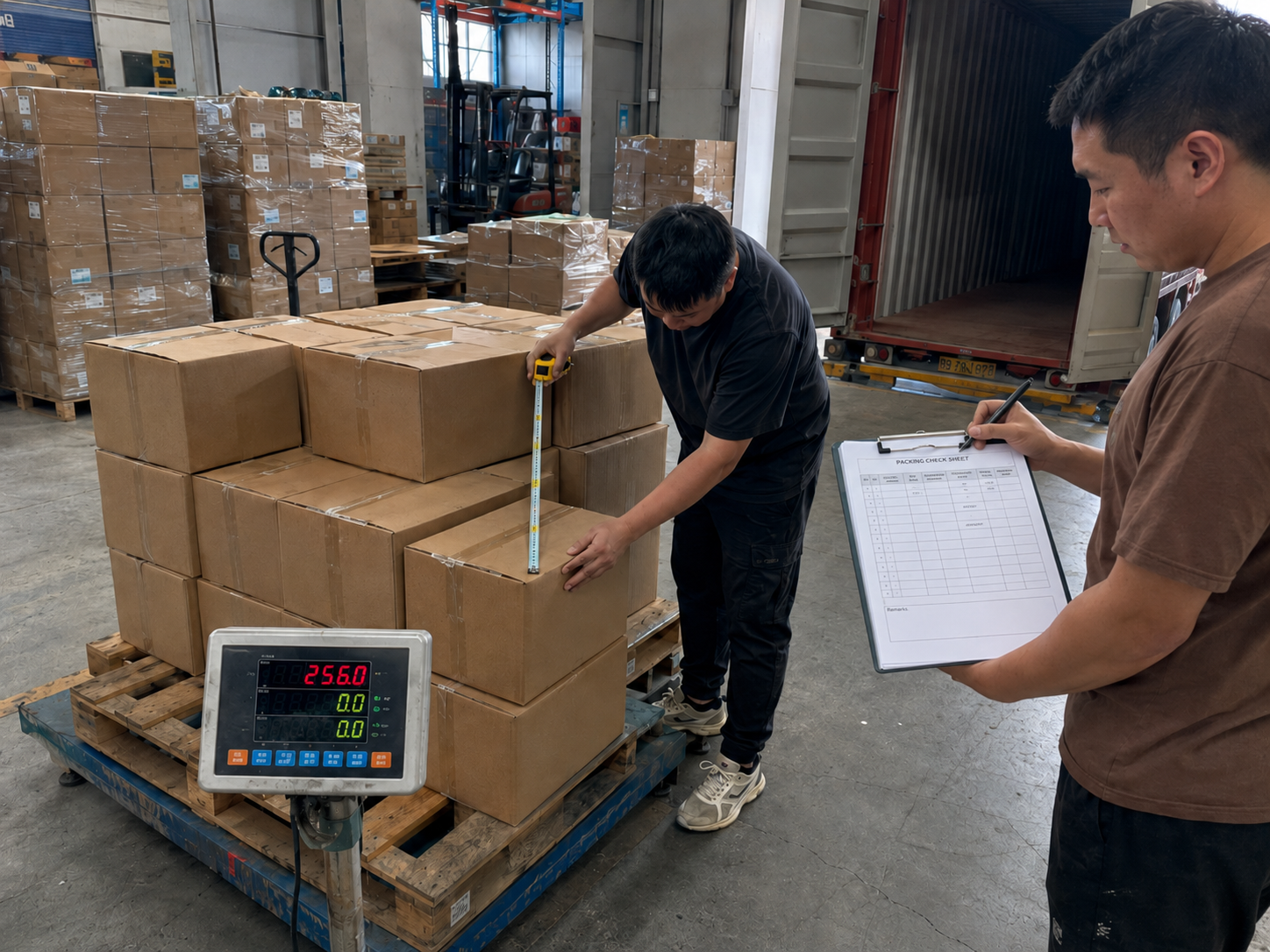
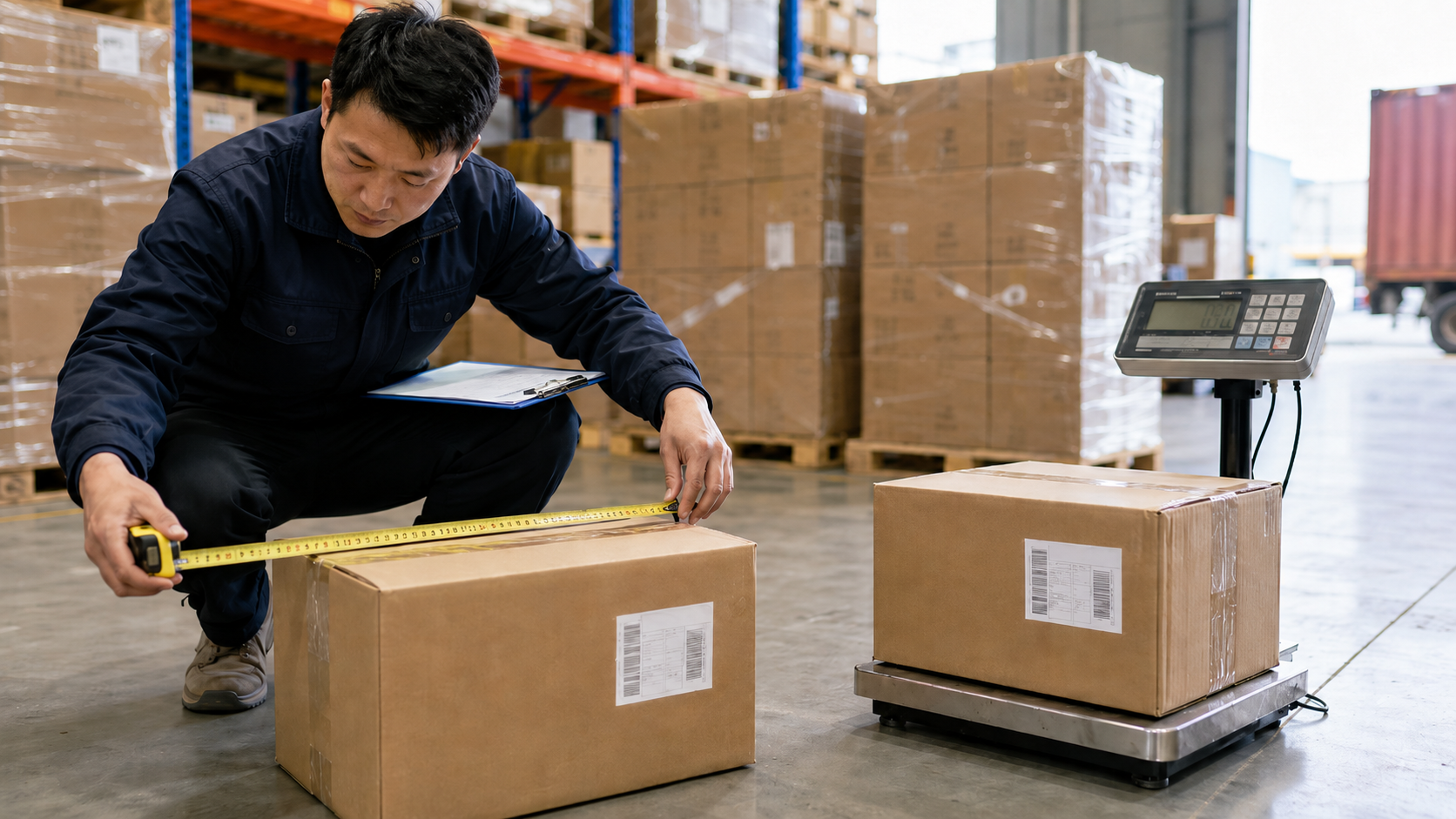
The warehouse team measures the outer carton size using a tape measure or dimensioning tool.
For regular cartons, they record:
Length × Width × Height
For cargo with different carton sizes, each carton type should be measured separately.For irregular packages, wooden cases, pallets, or bulged cartons, the largest outer points should be considered because carriers may charge based on the space the cargo occupies.
Step 3: Weigh the Cartons
After measuring the cartons, the warehouse team uses a scale to check the actual gross weight.
For shipments with many cartons, the forwarder may:
Weigh every carton
Weigh each carton type
Weigh representative cartons if all cartons are identical
Weigh pallets or wooden cases as a full packed unit
The goal is to get reliable gross weight before the cargo moves.
Step 4: Share Photos and a Measurement Report
A good freight forwarder should be able to share clear information before shipment.
You can ask for:
Carton quantity
Carton dimensions
Actual gross weight per carton
Total gross weight
Total CBM
Carton photos
Label photos
Packing list
Estimated chargeable weight
Updated shipping quotation
This gives you better control before booking air freight, sea freight, or door-to-door delivery.
Actual Weight vs Volumetric Weight: What Importers Should Know
What Is Volumetric Weight?
Volumetric weight is a calculated weight based on carton size. It is also called dimensional weight.
The common formula is:
Volumetric Weight = Length × Width × Height ÷ Divisor
The divisor depends on the shipping method and carrier rules.For example, the DHL volumetric weight guide:
https://www.dhlexpress.nl/en/faq/shipping/how-do-i-calculate-volumetric-weight explains how volumetric weight is calculated for express shipping.
For air cargo, the IATA guide to air cargo tariffs and volumetric weight:
https://www.iata.org/en/publications/newsletters/iata-knowledge-hub/air-cargo-tariffs-and-rules-what-you-need-to-know/explains that carriers may charge by actual weight or volumetric weight, and the higher value is commonly used for pricing.
Which Weight Will Be Charged?
In many shipping methods:
Chargeable Weight = Higher of Actual Weight and Volumetric Weight
Example:
Actual weight: 80kg
Volumetric weight: 120 kg
Chargeable weight: 120 kg
In this case, the shipment is charged as 120 kg, not 80 kg.
This is why carton dimensions and actual weight before shipping are both important. If you only know the actual weight, you
may still not know the final shipping cost.
You can also use the FedEx dimensional weight calculator:
https://page.message.fedex.com/weight_calculator/as a reference tool to better understand how package dimensions may affect billable weight.
What Information Should You Ask for Before Shipping?
Before your cargo is shipped, you should ask your supplier or freight forwarder for a clear carton data report.
Basic Carton Information Checklist
Ask for:
Total number of cartons
Carton dimensions
Actual gross weight per carton
Total gross weight
Total CBM
Product name or SKU
Shipping marks
Carton photos
Packing list
Pallet size and weight, if pallets are used
Estimated chargeable weight
Updated freight cost
This checklist is useful for importers, wholesalers, Amazon sellers, e-commerce sellers, and companies shipping from China to Africa.
When Should You Request This Information?
The best time to request carton data is after the goods arrive at the forwarder’s warehouse and before shipment booking is finalized.
You should confirm the data before:
Air freight booking
Sea freight loading
Customs document preparation
Final freight quotation
Door-to-door delivery arrangement
For new importers, it is safer to confirm carton data at the forwarder’s warehouse instead of relying only on early supplier estimates.
Can Okaytrans Provide Carton Dimensions and Actual Weight Before Shipping?
Yes, We Can Measure and Confirm Before Shipment
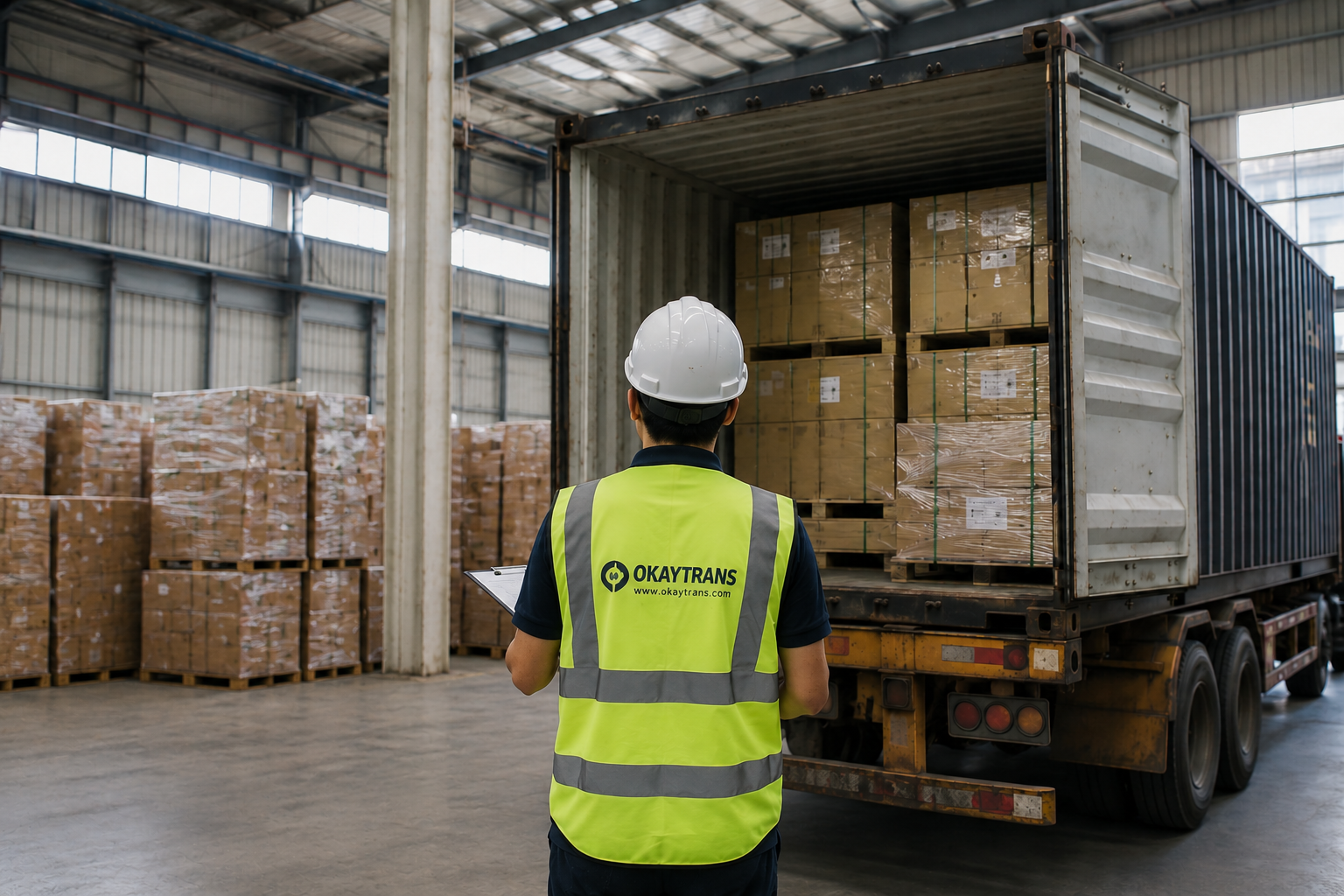
Yes. Okaytrans can provide carton dimensions and actual weight before shipping. When your goods arrive at our warehouse,
our team can help check:
Carton quantity
Outer carton condition
Carton dimensions
Actual gross weight
Total CBM
Shipping marks
Label photos
Carton photos
Estimated chargeable weight
Updated shipping cost
Okaytrans provides carton size and weight confirmation before shipment, so importers can review the real packing data before cargo leaves China.
What You Will Receive from Okaytrans
Depending on your shipment, Okaytrans can provide:
Carton dimension list
Actual gross weight list
Total carton quantity
Total CBM
Chargeable weight estimate
Photos or short videos
Updated freight quotation
Suggested shipping method
This is useful when you are comparing air freight, sea freight, express shipping, or China-to-Africa door-to-door logistics.
Why This Helps Importers Shipping to Africa
For Africa shipments, accurate carton size and actual weight are very important.
They can affect:
Air freight cost
Sea freight CBM
LCL shipping cost
Door-to-door delivery cost
Customs and clearance planning
Local truck or van arrangement
Remote area delivery quotation
For example, if a supplier estimates 35 cartons at 480 kg, but the warehouse check shows larger carton dimensions, the chargeable weight may be higher than expected. By confirming this before shipping, the importer can adjust the shipping plan early instead of facing extra charges after cargo movement.
This is one reason many importers prefer to work with a freight forwarder that can check carton data at the warehouse.
Need to confirm carton dimensions and actual weight before shipping from China? Send your supplier details to Okaytrans, and our warehouse team can help check the cargo before shipment.
Example: How Carton Measurement Helped Avoid Cost Surprises
One importer planned to ship 35 cartons from China to Africa. The supplier first estimated the shipment at 480 kg.
After the goods arrived at the Okaytrans warehouse, our team measured the final carton dimensions and checked the actual gross weight. The result showed a higher chargeable weight because the cartons were larger than expected.
By confirming the data before shipment, the customer adjusted the shipping method early and avoided unexpected charges after dispatch.
This is a common situation in B2B logistics. Even small changes in carton size can create a big cost difference when the shipment includes many cartons.
Common Mistakes Importers Make with Carton Size and Weight
Only Asking for Product Weight
Product weight is not enough for shipping cost. Freight cost is usually based on packed cargo weight, carton size, and chargeable weight.
Always ask for gross weight and carton dimensions.
Trusting Supplier Estimates Without Checking
Supplier estimates can be useful at the early quotation stage. But they may not be accurate after final packing.
If your shipment is urgent or high-value, ask your freight forwarder to verify the carton data before shipment.
Ignoring Carton Bulging or Irregular Packaging
A carton may become larger after packing if it is overfilled. Bulging cartons can increase measured dimensions.
Irregular packaging, wooden cases, and pallets may also change the final chargeable weight.
Confirming Too Late
If you check the carton size and weight after booking, it may be too late to change the shipping plan.
Confirm the data before final quotation, booking, and dispatch.
Best Practice: How to Ask Your Freight Forwarder
You can copy and send this message to your freight forwarder:
Hi, before shipping, please help confirm the carton quantity, carton dimensions, actual gross weight per carton, total gross weight, total CBM, and photos of the outer cartons. Please also advise the estimated chargeable weight and updated shipping cost.
This simple message helps you get the key data needed for international shipping.
Useful External Resources
For more information about dimensional weight and chargeable weight, you can refer to these official resources:
DHL guide to chargeable weight:https://dct.dhl.com/help
DHL volumetric weight guide:https://www.dhlexpress.nl/en/faq/shipping/how-do-i-calculate-volumetric-weight
UPS guide to shipping dimensions and weight:https://www.ups.com/us/en/support/shipping-support/shipping-dimensions-weight.page
IATA guide to air cargo tariffs and volumetric weight:https://www.iata.org/en/publications/newsletters/iata-knowledge-hub/air-cargo-tariffs-and-rules-what-you-need-to-know/
FedEx dimensional weight calculator:https://page.message.fedex.com/weight_calculator/
Conclusion: Always Confirm Carton Dimensions and Actual Weight Before Shipping
You can and should confirm carton dimensions and actual weight before shipping. This helps you estimate freight cost,avoid surprise charges, prepare customs documents, and plan final delivery.
A professional freight forwarder can measure carton size, check gross weight, calculate CBM, estimate chargeable weight, and share photos before the cargo moves.
If you are shipping goods from China to Africa, Okaytrans can help you check carton dimensions, actual weight, CBM,chargeable weight, and shipping options before shipment. This gives you better cost control and a smoother logistics process.
Contact Okaytrans to get carton measurement, actual weight confirmation, and a shipping quote from China to Africa.
FAQ About Carton Dimensions and Actual Weight Before Shipping
Can a freight forwarder provide carton dimensions before shipping?
Yes. A freight forwarder can measure the length, width, and height of cartons after the goods arrive at the warehouse.This helps importers confirm the final carton size before booking shipping.
What is the difference between actual weight and volumetric weight?
Actual weight is the real gross weight of the packed carton. Volumetric weight is calculated from carton size. In many shipping methods, the chargeable weight is the higher one.
Why is my shipping cost higher than the supplier’s estimate?
Your shipping cost may be higher if the final carton dimensions or actual weight are bigger than the supplier’s estimate. Large but light cartons can also create higher volumetric weight.
Should I confirm carton weight before air freight or sea freight?
Yes. For air freight, carton weight and volume affect chargeable weight. For sea freight, carton dimensions help calculate CBM and plan loading or delivery.
Can Okaytrans check carton dimensions and actual weight for my shipment?
Yes. Okaytrans can check carton quantity, carton dimensions, actual gross weight, CBM, photos, and estimated chargeable weight before shipment. This is especially useful for importers shipping from China to Africa.