When you ship goods internationally, your freight forwarder will usually compare actual weight vs volumetric weight. The higher one becomes the chargeable weight, which is used to calculate your shipping cost.
In this guide, you will learn what actual weight means, what volumetric weight means, how to calculate chargeable weight, and how to avoid unexpected freight costs when shipping from China to Africa.
This “whichever is higher” rule is common in international logistics. According to DHL’s chargeable weight guide, chargeable weight is calculated based on whichever is greater: actual weight or volumetric weight.UPS shipping dimensions and weight guide also explains that the greater of actual weight and dimensional weight is used as billable weight.
What Is Actual Weight in Shipping?
Simple Definition of Actual Weight
Actual weight is the real weight of your cargo after it is weighed on a scale.
It usually includes:
- product weight
- cartons
- pallets
- bubble wrap
- wooden cases
- other packing materials
In international shipping, actual weight is usually measured in kilograms or pounds.
For example, if your supplier says your products weigh 100 kg, but the cartons and packaging add another 15 kg, the actual shipping weight may be 115 kg.
Example of Actual Weight
Let’s say you are shipping 10 cartons of shoes from China to Kenya.
Each carton weighs 12 kg.
So:
10 cartons × 12 kg = 120 kg
Your actual weight is 120 kg.
This number is important, but it may not be the final weight used for freight charges.
Freight forwarder insight:
Many importers only check product net weight. But freight forwarders use gross weight because carriers must move both
the products and the packaging.
What Is Volumetric Weight?
Simple Definition of Volumetric Weight
Volumetric weight is also called dimensional weight. It is based on how much space your cargo takes, not only how heavy it is.
This is very important for light but bulky goods, such as:
- shoes
- clothes
- bags
- toys
- foam products
- plastic containers
- pillows
- bedding
- packaging materials
A carton can be light, but if it is very large, it takes up valuable space in an aircraft, truck, warehouse, or container.
Why Volumetric Weight Matters
Carriers do not only sell weight capacity. They also sell space.
For example, an aircraft may still have enough weight capacity, but no cargo space left. If a shipment takes a lot of room, the carrier still needs to charge fairly for that space.
That is why a large carton of pillows may cost more to ship than a small carton of metal parts, even if both have similar actual weight.
Actual Weight vs Volumetric Weight: What Is the Difference?
The main difference is simple:
Actual weight measures how heavy your cargo is. Volumetric weight measures how much space your cargo takes.
| Item | Actual Weight | Volumetric Weight |
|---|---|---|
| Based on | Scale weight | Cargo size |
| Also called | Gross weight | Dimensional weight |
| Best for | Heavy and dense goods | Light and bulky goods |
| Common products | Machinery, batteries, metal parts | Shoes, clothes, bags, foam, toys |
| Used for cost? | Yes, if higher | Yes, if higher |
Actual Weight Measures Mass
Actual weight is usually more important for dense goods.
Examples include:
- hardware
- machinery parts
- tiles
- batteries
- metal products
- auto parts
These goods may not take much space, but they are heavy.
Volumetric Weight Measures Space
Volumetric weight is usually more important for bulky goods.
Examples include:
- shoes in large cartons
- soft bags
- plastic products
- bedding
- furniture accessories
- toys with large packaging
These goods may not be very heavy, but they take up more cargo space.
Expert note:
In logistics, shipping cost is not only about weight. It is also about space. A reliable freight forwarder should check both before giving you a final quote.
Do Freight Forwarders Use Actual or Volumetric Weight?
The Short Rule: Whichever Is Higher
Most freight forwarders and carriers compare actual weight vs volumetric weight. The higher number becomes the chargeable weight.
For example:
Actual weight: 120 kg
Volumetric weight: 180 kg
Chargeable weight: 180 kg
In this case, the shipping cost is calculated based on 180 kg.
This is also explained by DHL’s chargeable weight guide and UPS shipping dimensions and weight guide, which both state that the higher weight is used for freight or parcel billing.
Why the Higher Weight Is Used
The rule protects both sides of the transport system.
Heavy cargo uses weight capacity.
Bulky cargo uses space capacity.
If carriers only charged by actual weight, large but light shipments would take too much space without paying fair freight. If they only charged by volume, small but heavy cargo would also be unfairly priced.
So, chargeable weight gives carriers a practical way to price both weight and space.
Does This Apply to Air, Courier, and Sea Freight?
Yes, but the rule may work differently depending on the shipping method.
Air freight:
Volumetric weight is very important because aircraft space is limited. The IATA air cargo tariffs and rules guide explains that air freight pricing may use the higher of actual weight or volumetric weight.
Express courier:
Courier companies such as DHL, UPS, and FedEx commonly use dimensional weight rules for parcels. You can also use the FedEx dimensional weight calculator to estimate dimensional weight before shipping.
Sea LCL freight:
For less-than-container-load shipping, cargo may be charged by weight or measurement, depending on which is higher.This is often called W/M in sea freight.
Sea FCL freight:
For full-container-load shipping, you usually pay for the container. But volume still matters because you need to know whether your cargo can fit inside the container.
How to Calculate Volumetric Weight
Common Volumetric Weight Formula
The basic formula is:
Volumetric Weight = Length × Width × Height ÷ Volumetric Divisor
For metric measurements, this usually means:
Length(cm) × Width(cm) × Height(cm) ÷ Divisor = Volumetric Weight(kg)
The divisor may vary by carrier, service, route, and shipping method.
For many air freight shipments, a common calculation is:
Length × Width × Height ÷ 6000
The IATA air cargo tariffs and rules guide explains that the general rule for air cargo volumetric rate is to divide cubic centimeters by 6000. The Maersk air cargo chargeable weight guide also explains how actual weight, volumetric weight, and chargeable weight affect air freight charges.
Always confirm the divisor with your freight forwarder before shipping.
Example Calculation
You want to ship one carton from China to Ghana.
Carton size:
Length: 60 cm Width: 50 cm Height: 40 cm Actual weight: 12 kg
Using a divisor of 6000:
60 × 50 × 40 ÷ 6000 = 20 kg
So:
Actual weight: 12 kg
Volumetric weight: 20 kg
Chargeable weight: 20 kg
The shipment will be charged as 20 kg, because the volumetric weight is higher.
What Information Should You Send to a Freight Forwarder?
To get an accurate freight quote, send these details:
- cargo name
- number of cartons
- carton size
- gross weight per carton
- total CBM
- destination country and city
- ready date
- preferred shipping method
- product photos, if available
Okaytrans freight forwarder insight:
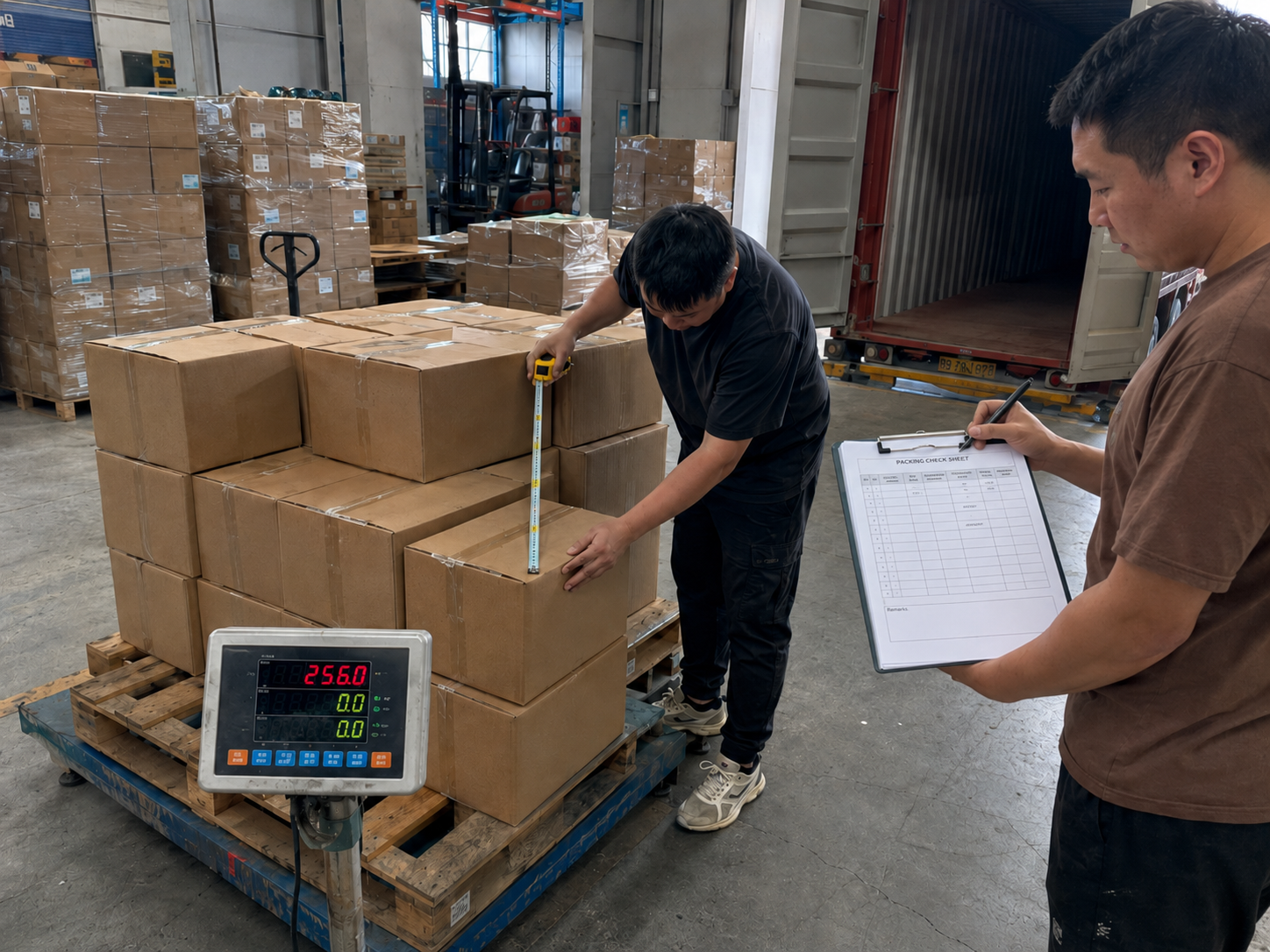
Before we quote, we check both carton dimensions and gross weight. This helps avoid price changes after the cargo arrives at the warehouse and gets measured again.

Why Your Shipping Cost May Be Higher Than Expected
Your Cargo Is Light but Bulky
This is one of the most common reasons.
Your goods may not be heavy, but they may take up a lot of space. This often happens with shoes, bags, clothes,plastic products, toys, and home goods.
For example:
Actual weight: 80 kg
Volumetric weight: 150 kg
Chargeable weight: 150 kg
Even though your goods only weigh 80 kg, the carrier may charge based on 150 kg.
Your Supplier Used Oversized Cartons
Sometimes the problem is not the product. It is the packaging.
Oversized cartons can contain too much empty space. This increases volumetric weight and raises the shipping cost.
Common packaging problems include:
- cartons too large for the products
- too much empty space inside
- poor carton stacking
- mixed goods packed loosely
- soft goods not compressed
Your Cargo Was Re-Measured at the Warehouse
Your supplier may give one size and weight, but the warehouse or carrier may measure it again.
This is why the final chargeable weight may change if the real dimensions or weight are different from the supplier’s packing list.
Real case example:
A customer shipped backpacks from Yiwu to Kenya. The supplier used large mixed cartons with too much empty space.After repacking the goods into tighter export cartons, the chargeable weight was reduced, and the customer saved on air freight.
How to Reduce Volumetric Weight and Shipping Cost
Use Right-Sized Cartons
Ask your supplier to use cartons that match the product size.
Avoid large empty spaces. A smaller carton can reduce volumetric weight and lower freight cost.
Good carton planning can help you:
- reduce wasted space
- improve stacking
- protect products better
- lower chargeable weight
Compress or Repack Bulky Goods
Some products can be compressed or repacked.
This works well for:
- clothes
- bedding
- pillows
- soft bags
- foam items
- fabric products
For soft goods, vacuum packing may help, but it must not damage the product.
Compare Air, Sea, and Express Options
The best shipping method depends on your cargo type, deadline, and budget.
Air freight
is faster, but volumetric weight can affect cost a lot.
Express courier
is simple and fast, but may be expensive for large cartons.
Sea LCL
may be better for bulky cargo if you have enough time.
Sea FCL
may be better when your shipment volume is large enough to fill a container.
Ask for Chargeable Weight Before Shipping
Before you accept a quote, ask your freight forwarder:
What is the actual weight?
What is the volumetric weight?
What is the final chargeable weight?
Which divisor do you use?
Can the packaging be optimized?
This simple step can help you avoid surprise charges.
Actual Weight vs Volumetric Weight for China to Africa Shipping
Why This Matters for Africa Importers
For many importers shipping from China to Africa, chargeable weight is a key cost factor.
This is especially true when shipping from Guangzhou, Shenzhen, Yiwu, or Foshan to destinations such as:
- Nigeria
- Kenya
- Ghana
- Tanzania
- Uganda
- South Africa
- Senegal
- Côte d’Ivoire
Many Africa importers buy from several suppliers and consolidate goods in one China warehouse. In this case, accurate measurement is very important.
Common Product Types Affected by Volumetric Weight
Volumetric weight often affects these China-to-Africa shipments:
- shoes
- garments
- bags
- toys
- plastic products
- small home appliances
- furniture accessories
- beauty tools
- packaging materials
- household goods
If your cargo is light but large, you should ask for a chargeable weight check before shipping.
How Okaytrans Helps Calculate the Right Shipping Cost
Okaytrans helps importers calculate shipping costs clearly before cargo moves.
We can help you:
- check actual weight
- calculate volumetric weight
- confirm chargeable weight
- compare air freight and sea freight
- consolidate goods from different suppliers
- inspect warehouse measurements
- suggest repacking when useful
- provide China-to-Africa logistics solutions
For China to Africa shipments, Okaytrans usually checks supplier packing data again at the warehouse before final quotation, because carton size differences can directly change the chargeable weight.
Example:
If a customer consolidates goods from three suppliers in Guangzhou and ships to Lagos, we can check each carton,calculate total actual weight and volumetric weight, then recommend the most cost-effective route.
What Should You Ask Before Accepting a Freight Quote?
Key Questions to Ask Your Freight Forwarder
Before you confirm a shipment, ask:
- Do you charge by actual weight or volumetric weight?
- What is the volumetric divisor?
- What is the final chargeable weight?
- Are warehouse measurements included?
- Will the carrier recheck dimensions?
- Can you help reduce volumetric weight?
- Is air, sea, or express better for this cargo?
- Are there extra destination charges?
A transparent freight forwarder should explain chargeable weight clearly before shipping, not only after the goods arrive at the warehouse.
Documents and Details to Prepare
To get a more accurate quote, prepare:
- packing list
- commercial invoice
- carton dimensions
- gross weight
- product name
- product photos
- supplier address
- destination address or port
Conclusion: Which Weight Is Used for Shipping Cost?
In most international shipping, freight forwarders compare actual weight vs volumetric weight and use whichever is higher as the chargeable weight. This rule helps carriers price both heavy cargo and bulky cargo fairly.
Before shipping from China to Africa, always provide accurate carton size, gross weight, and cargo details. This allows your freight forwarder to calculate the correct shipping cost and suggest the best shipping method.
Okaytrans can help you check actual weight, calculate volumetric weight, compare air and sea freight options, and find a cost-effective shipping solution from China to Africa.
Want to know your real chargeable weight before shipping?
Send Okaytrans your packing list, carton size, gross weight, product name, and destination city. Our team can help you compare actual weight vs volumetric weight and recommend the most cost-effective shipping method from China to Africa.