
If you’re planning used cars transport to Africa, success comes down to three things: choosing the right ocean mode (RoRo vs. container), meeting country-specific rules (such as CTN/ECTN/BSC, age and drive-side limits), and getting your export paperwork right the first time. This guide walks you through the end-to-end process for West, East and Southern Africa—plus links to official resources so you can self-verify before you buy or book. For U.S. exports, remember the 72-hour rule and document presentation at the port of export as outlined by U.S. Customs and Border Protection.
Who it’s for: first-time retail importers, Africa-based dealers, and exporters consolidating units to ports like Apapa/Tin Can, Tema, Mombasa, Dar es Salaam, and Durban.
The end-to-end flow (Africa shipments)
Quote & booking
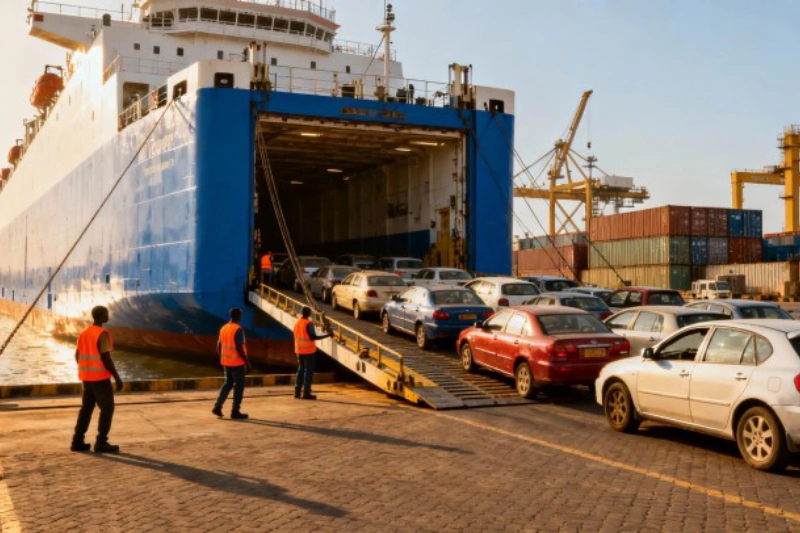
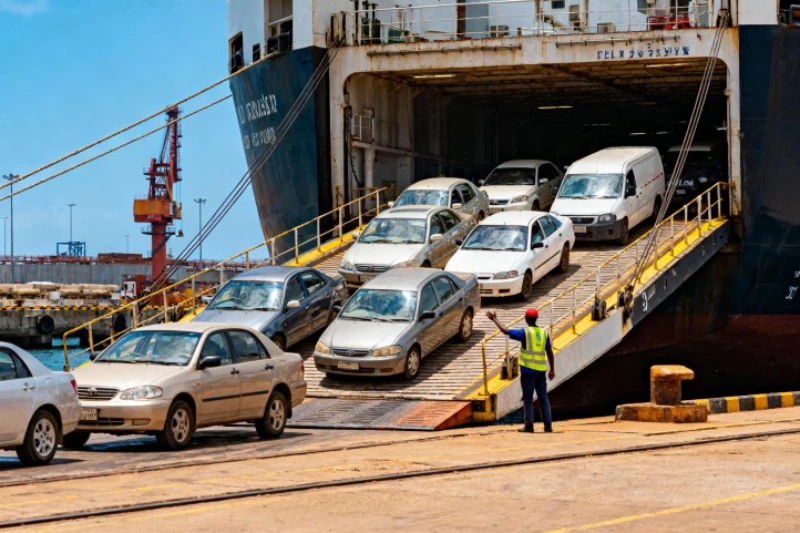
Decide between RoRo (drive on/off a car carrier) and container. For a quick primer on RoRo mechanics, see What is RoRo? (Wallenius Wilhelmsen).
Inland pickup and port delivery
Align truck availability, auction/yard release, and port cutoff. Share narrow streets or low-clearance notes in advance so the right truck (and ramps/winch if needed) shows up.
Export paperwork (U.S. example)
Per CBP – Exporting a Motor Vehicle, present the vehicle and required ownership documents at the port of export; file EEI in AES and keep your Bill of Lading (BOL) clean—your BOL is both receipt and condition record. CBP also runs a DIS pilot for used vehicle export documents that some ports support.
Destination-specific compliance
West/Central Africa frequently requires a Cargo Tracking Note (CTN/ECTN/BSC) before loading, and the number must appear on the B/L and manifest (e.g., Ghana CTN public notice by GRA). East Africa focuses on right-hand-drive (RHD), age limits, and pre-export/destination inspection (see KRA: Importing a Motor Vehicle and KEBS PVoC).
Arrival, inspection & clearance
Ensure CTN/ECTN/BSC validity (where required), complete pre-export or destination inspection steps, and arrange final delivery.
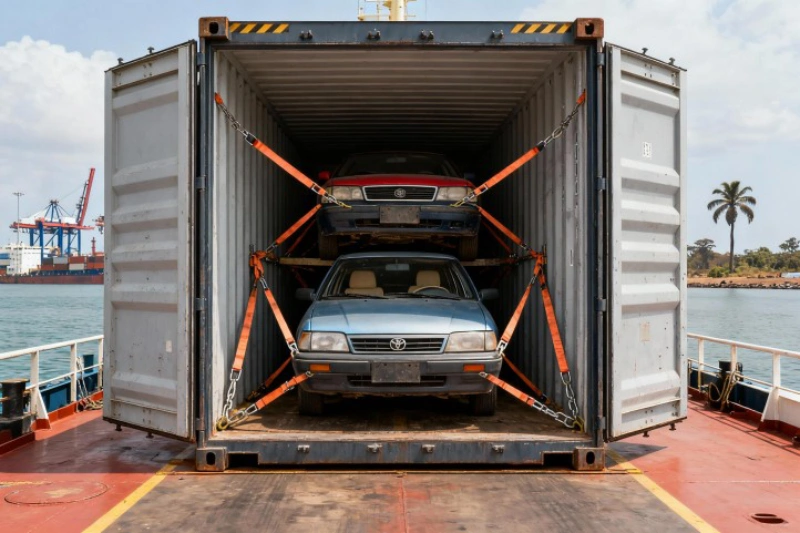
RoRo vs. container for Africa: which one should you choose?
| Mode | Protection | Typical Cost Position | Frequency/Capacity | Best For |
| RoRo | Enclosed decks, driven on/off | $$ (often cheaper for runners) | Frequent sailings on main Africa trades | Running vehicles, dealer flows, standard units |
| Container | Steel box, sealed | $$$$ (esp. single units) | Global coverage; requires stuffing/unstuffing | High-value cars, shipping parts with the unit, special handling |
Rule of thumb: If the car runs and you don’t need to ship extra parts, RoRo is usually the value play. If you’re shipping high-value cars or adding parts/wheels, consider container. For visuals, embed 360 Vessel Tour | RoRo Vessel from the inside.
Country rules that change your plan (quick reference)
Always verify the latest rule with the official authority before booking. Policies evolve.
| Country | Main Ports | Age/Drive-side/Key Rules | Special Docs | Inspection | Notes / Official Sources |
| Kenya | Mombasa | RHD only; used vehicles generally ≤8 years from first registration | — | Pre-export PVoC | KRA – Motor Vehicle Procedures · KEBS PVoC · KEBS Notice to Used Vehicle Importers |
| Tanzania | Dar es Salaam | Age rules by category; confirm with TBS | — | PVoC (CoR for used vehicles) | TBS PVoC overview · TBS Procedures for Vehicles (2023) · Public Notice: CoR before shipment |
| Uganda | Mombasa/Dar (transit) | Destination inspection now widely applied to used vehicles | — | UNBS Destination Inspection | UNBS notice (Destination Inspection for used vehicles) · UNBS news: penalties/CRW · UNBS import inspection scheme |
| Ghana | Tema/Takoradi | Age-related penalties apply; CTN mandatory | CTN | — | GRA CTN public notice · Carrier circular example: ONE Line – GRA CTN Implementation |
| Nigeria | Apapa/Tin Can | Import requires Form M registration & PAAR validation | Form M, PAAR | — | NCS Import Guidelines (Form M) · NCS: PAAR responsibilities/timelines · NCS Import/Export Timelines · CBN trade/circulars: CBN Documents Hub |
| South Africa | Durban/Coega/Cape Town | Used vehicle imports largely restricted; specific exemptions only | ITAC permit + NRCS LOA | — | gov.za – Importing a second-hand vehicle · ITAC Import Control · NRCS – Importing vehicles · SARS media note on used vehicle imports |
| Benin (Cotonou) | Cotonou | Popular for regional transits; ECTN/BESC mandatory | ECTN/BESC | — | Port Autonome de Cotonou – BESC/ECTN · BESC platform |
Compliance essentials (and where cars get stuck)
U.S. export (if shipping from the U.S.)
Submit used vehicle export documents ≥72 hours before export and present both vehicle and documents at the port. See CBP – Exporting a Motor Vehicle and the DIS pilot guidance for digital submissions.
CTN/ECTN/BSC (West/Central Africa)
Many countries require pre-validated CTN/ECTN numbers before loading, printed on the B/L & manifest. For Ghana, see GRA CTN notice; for Benin, refer to Port of Cotonou’s BESC/ECTN page.
Right-hand-drive & age limits (East Africa)
Kenya enforces RHD and ≤8-year rules; confirm the first registration year before purchase (see KRA guidance). For Tanzania, follow TBS PVoC with CoR; for Uganda, note UNBS destination inspection and related penalties.
Nigeria’s process (time-critical)
You must open Form M and obtain PAAR via an authorized dealer bank; align this before shipment to avoid storage/demurrage at destination. See also NCS import/export timelines and relevant CBN circulars.
South Africa’s restrictions
Importing a used vehicle is generally restricted; only specific categories qualify and you’ll need both an ITAC import permit and an NRCS LOA. Start with gov.za’s overview page.
Cost drivers (Africa edition) & how to save safely
What sets your total landed cost:
Ocean mode (RoRo vs. container) and seasonality (peak weeks sail fuller and price firmer).
CTN/ECTN/BSC fees by country, plus agency charges.
Inspection costs (e.g., TBS PVoC/CoR; UNBS destination inspection fee).
Port storage/demurrage/detention if Form M/PAAR or CTN isn’t ready when the ship arrives (see NCS timelines).
Inland haulage to/from origin/destination ports.
Savings—without cutting corners
Choose RoRo for standard runners; consider container for high-value units or when shipping parts together (learn more at What is RoRo?).
Get CTN early (e.g., Ghana CTN; Benin BESC/ECTN) so the number prints on the B/L & manifest—late CTN often means penalties.
For Kenya, verify RHD and ≤8-year compliance before you pay the seller (see KRA blog summary).
For Nigeria, open Form M and plan PAAR validation before loading to avoid idle time at the quay.
Photograph the car thoroughly and ensure BOL condition notes are accurate at pickup and delivery.
Apples-to-apples quote template (paste into your RFQs):
VIN + first registration date; operable? (roll/steer/stop); pickup address & access notes; target port; mode (RoRo/container); earliest/latest ship dates; CTN/ECTN/BSC needed?; Form M/PAAR status (Nigeria); inspection (pre-export/destination).
Conclusion
Used cars transport to Africa is straightforward when you (1) match mode to risk (RoRo for runners; container for high-value/special handling), (2) align destination rules—Ghana CTN, Nigeria Form M/PAAR, Kenya ≤8-year RHD, Tanzania TBS PVoC, Uganda UNBS destination inspection, South Africa ITAC/NRCS permits—and (3) protect yourself with photos and a clean BOL. With early CTN/Form M prep and realistic timing, you’ll hit vessel cut-offs and avoid avoidable storage or penalties.
FAQ
(1) Is CTN really mandatory for Ghana car imports?
Yes. The Ghana Revenue Authority states CTN compliance is mandatory; carriers also require the number on the B/L and manifest.
(2) What’s the safest, most economical way to ship a running used car to West Africa?
RoRo is usually best value for operable cars, with enclosed decks and frequent sailings—see What is RoRo?. Use container for high-value cars or when shipping parts together.
(3) Can I import a left-hand-drive car into Kenya?
Generally no. Kenya enforces RHD and ≤8-year rules for used vehicles; confirm first registration year and arrange PVoC per KRA and KEBS.
(4) What documents do I need for Nigeria?
Form M registration and PAAR validation via an authorized dealer bank—ideally before loading—plus standard import documents listed in NCS timelines.
(5) Is South Africa open to used car imports?
Mostly restricted. You typically need an ITAC import permit and an NRCS LOA. Check gov.za’s guide for qualifying categories.
Meta Title (≤50 chars):
Used Cars Transport to Africa (2025 Guide)
Meta Description (≤165 chars, incl. keyword):
Used cars transport to Africa—RoRo vs. container, Ghana CTN, Nigeria Form M/PAAR, Kenya 8-year rule, and inspection tips for safe, on-time delivery.
URL (≤75 chars, incl. keyword):
/used-cars-transport-to-africa-roro-container-ctn-form-m